Top Ceiling Fan Installation Cost Options in NSW
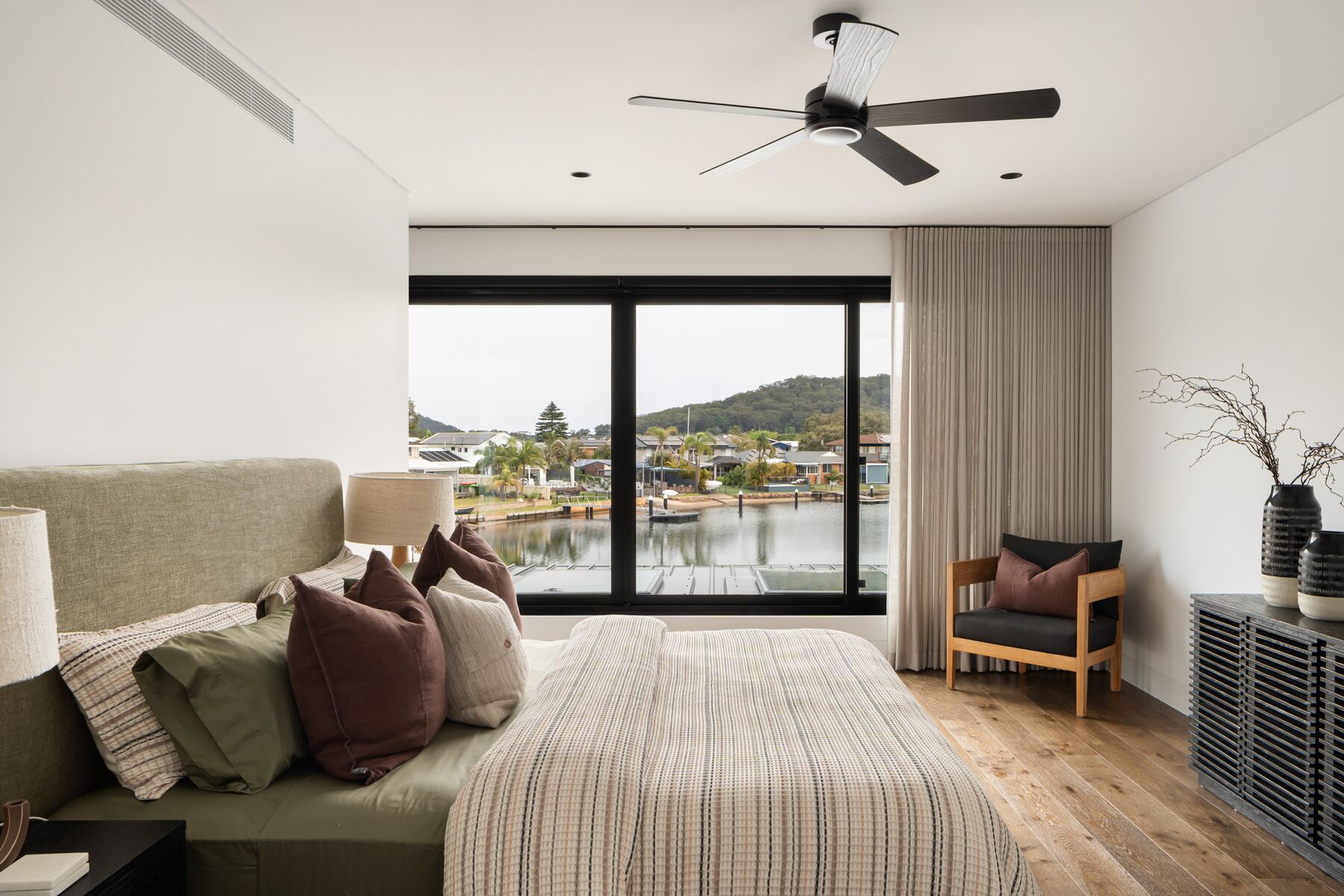
Ceiling Fan Installation Cost in NSW
Ceiling fan installation cost in NSW can start near $150 for a simple swap, yet pass $800 when new wiring, bracing or a cathedral ceiling is involved. The fan itself is only part of the bill. The ceiling, wiring, access and support point often decide the final price.
For accurate ceiling fan installation cost advice, Fusion Projects can assess your home, check the existing wiring and recommend a safe, compliant solution. As a licensed Central Coast electrician and Level 2 ASP, the team handles residential and commercial electrical work across Tuggerah, Terrigal, Gosford, Wyong and surrounding suburbs.
Here are the main installation options, who each suits and what to check before booking a licensed electrician in the Central Coast area.
Ceiling fan installation cost on the Central Coast | Fusion Projects
1. Fusion Projects: ceiling fan installation cost
Fusion Projects is a Central Coast electrical contractor for homeowners comparing ceiling fan installation cost and wanting the fan assessed, fitted and tested as one job. The team works across Tuggerah, Gosford, Wyong, Erina, Terrigal, The Entrance and nearby suburbs.
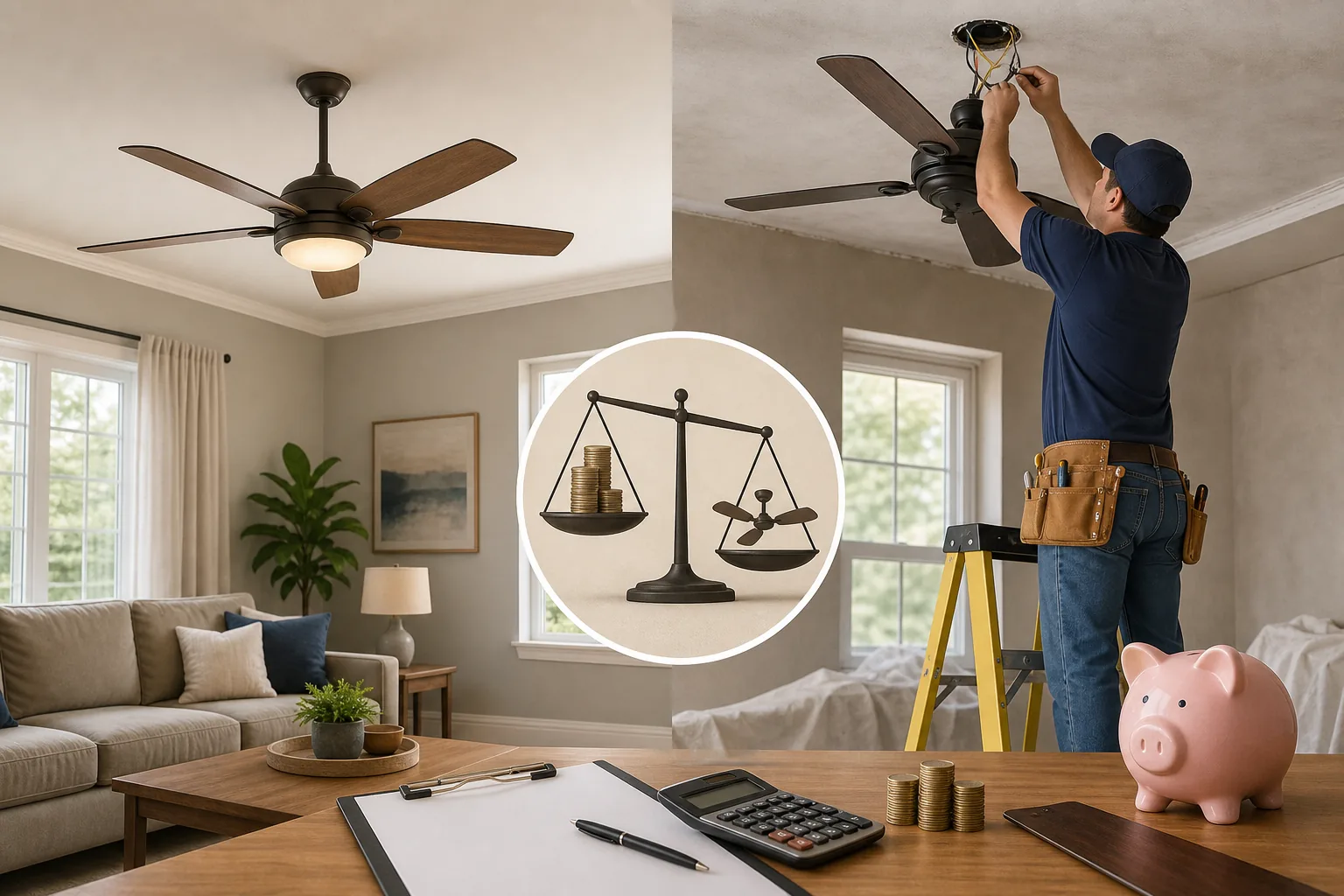
For a typical home with a suitable wiring point, Fusion Projects lists ceiling fan installation at AUD 150 to AUD 350 per fan. That matches the common retrofit range found across available cost information. It also gives a useful starting point before a site check confirms the ceiling support, access and fan type.
The company has more than 16 years of experience and is Level 2 ASP accredited. That accreditation is useful for broader electrical work, though a normal ceiling fan install usually does not need Level 2 service work. A licensed electrician can handle the fixed wiring, mounting and final tests.
The quote should make clear whether you are supplying the fan or asking Fusion Projects to supply it. It should also state if the work includes a wall switch, a control option, light kit or mounting upgrade. Those details stop a low first figure from turning into a higher invoice later.
Fusion Projects can also help when the fan forms part of a larger lighting job. For example, a living room may need a fan point moved while old downlights are replaced. The Central Coast lighting, GPOs and switches service is relevant when both jobs need to be planned together.
There is one fair limit. A web price cannot confirm what is above your ceiling. Older homes around Long Jetty or Berkeley Vale may have limited roof access, weak fixing points or wiring that needs repair. A clear quote needs those conditions checked before work begins.
2. Existing Wiring Installation, the lower-complexity retrofit option
Existing wiring installation is the lower-cost choice when a safe fan or light point is already in the right place. This is the scenario most people mean when they ask about ceiling fan installation cost.
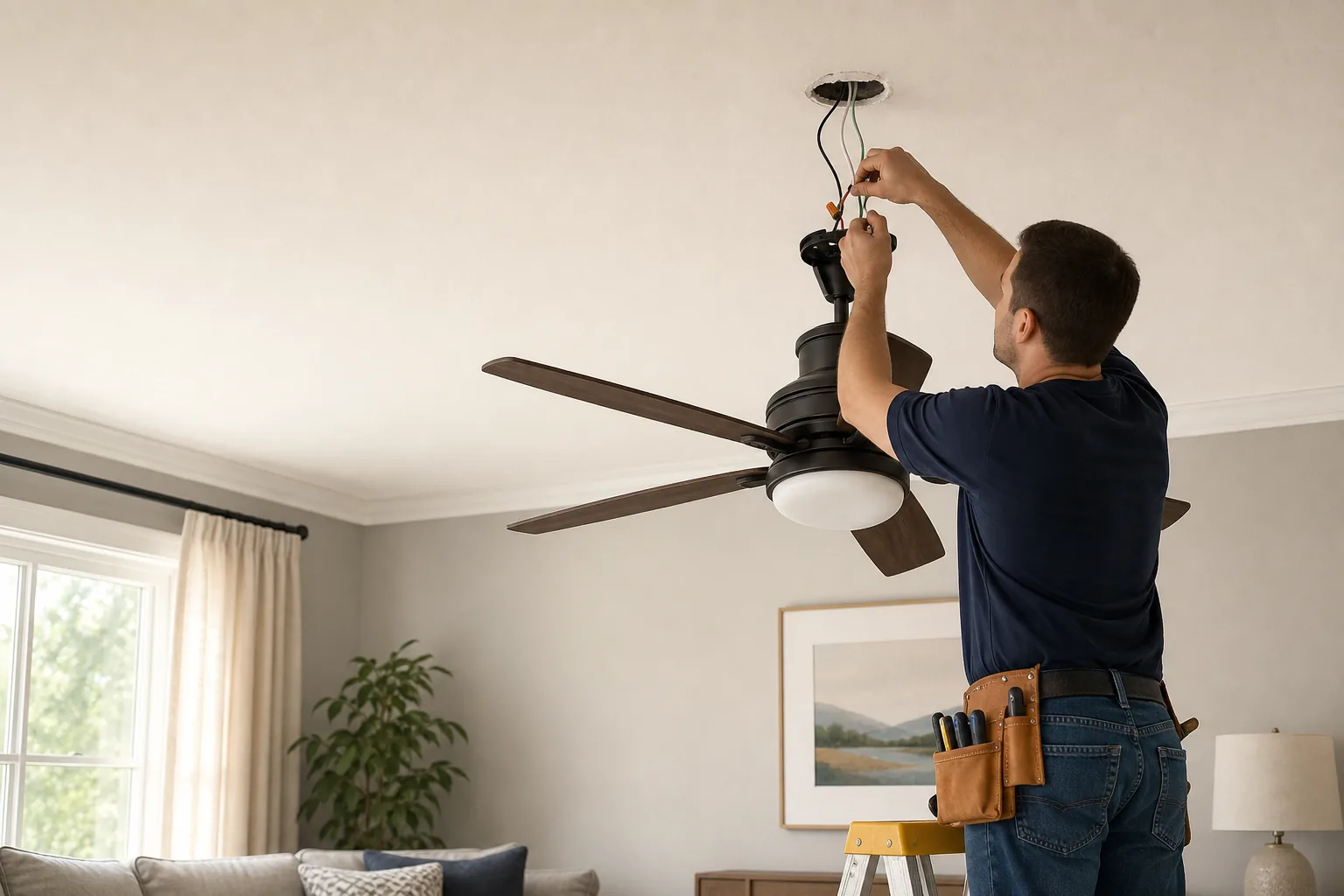
A same-point fan replacement may cost around $130 to $200 or more for labour, while existing-wiring work may cost around $150 to $300 per fan. The exact figure still depends on access and the condition of the mounting point.
A basic retrofit usually involves isolating the circuit, removing the old fitting, checking the cable and attaching the new fan to a suitable support. The electrician then connects the controls and tests the fan, light and protective devices.
That sounds simple. It is, provided the old point is suitable for a fan. A light fitting may hang from a support that cannot handle the weight or vibration of a ceiling fan. Plasterboard alone is not a suitable fixing point for a heavy moving fitting.
Ask the electrician to check these items:
- Is the existing cable in good condition?
- Does the fixing point connect to a joist or fan brace?
- Can the circuit carry the fan and any light kit?
- Will the existing switch work with the new fan?
- Does the fan need a remote or a new wall controller?
If the old fitting was a light, the job may need more work than a like-for-like fan swap. The electrician may need to add a support brace, alter the switch setup or repair a ceiling cut-out. Those are small changes compared with running a new cable, but they should still appear in the quote.
Existing wiring also makes it easier to fit several fans during one visit. The electrician can plan the work room by room rather than making separate trips. The per-fan labour cost may fall, though the total bill will rise with each added fan.
For a standard bedroom in Erina or a living room in Gosford, this is usually the most predictable option. Do not assume the lowest online range applies until the support and wiring have been seen.
3. New Wiring, Bracing or High Ceilings, for more complex installations
New wiring, ceiling bracing and high access are the main reasons ceiling fan installation cost rises. The fan may be the same price, but the electrician has more work before it can safely operate.
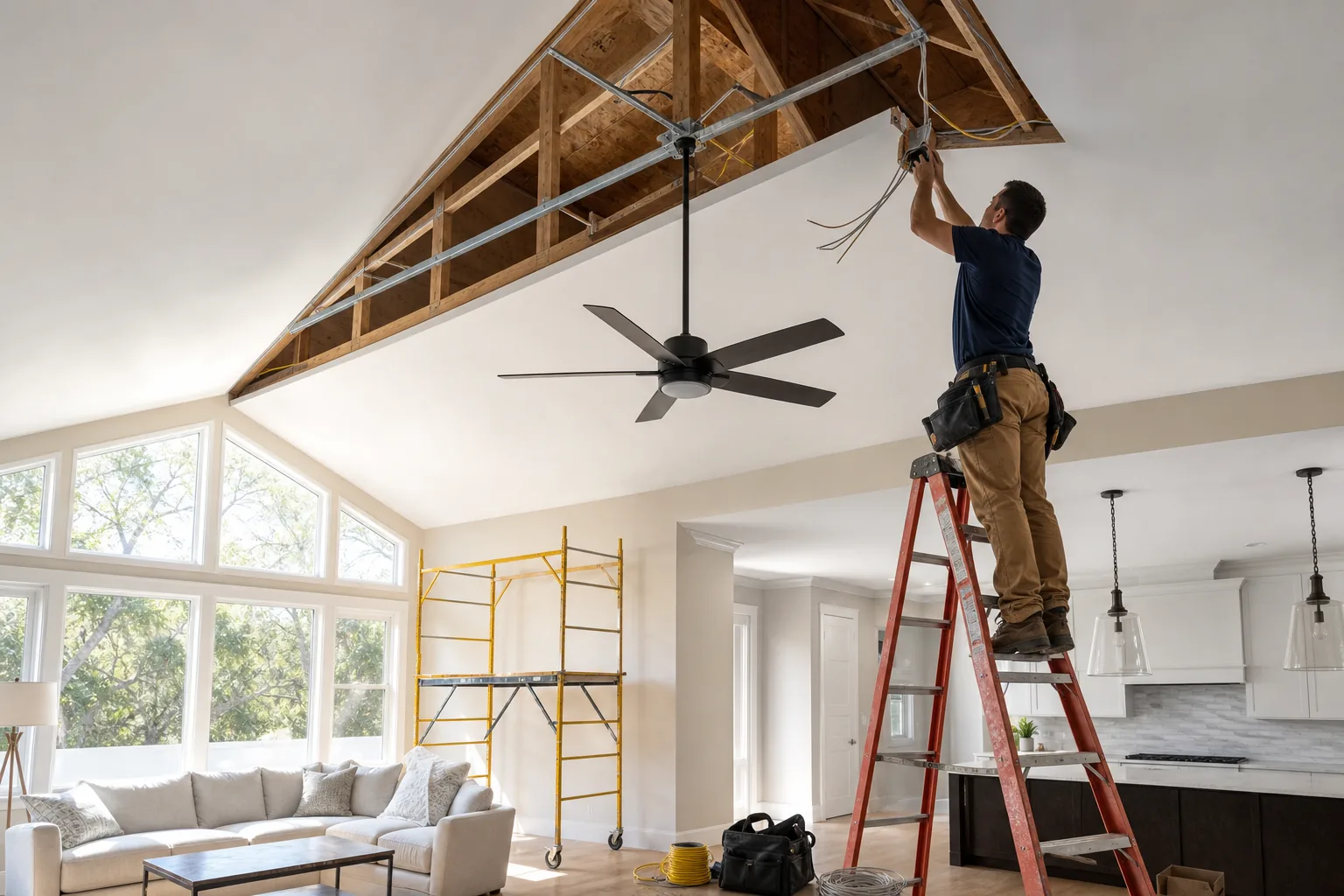
Jobs involving new wiring, bracing or high ceilings can cost around $350 to $600 per fan. A new fan point may cost around $350 to $700 or more. A new location may need cable from an existing circuit, a new switch position or a separate circuit, all of which can affect ceiling fan installation cost.
The ceiling structure matters too. A raked ceiling needs the fan to hang straight from an angled surface. Materials for angled-ceiling installation may cost about $30 to $60 before labour and access are counted. A cathedral ceiling may need an extension rod, with the rod alone commonly listed around $40 to $80.
High work can add more than a small parts charge. A safe platform, scaffold or specialist access may be needed. Scaffolding may cost about $150 to $400 and extension rods about $50 to $150 for high-ceiling work. These figures are guides, not a promise of the price for your home or the final ceiling fan installation cost.
Roof access can change the job in the other direction. On a single-storey house with open roof space, a cable run may be fairly direct. In an apartment with a concrete slab, the electrician may need surface conduit or another approved route. That can add time and affect the finished look.
Bracing deserves close attention. A fan creates movement over time. If the mount is only fixed to plasterboard, the fan may wobble and the fixings may loosen. A proper brace or joist fixing gives the fan a stable base and supports safe electrical installation.
Central Coast homes near the coast also need the right fan rating. Salt air can shorten the life of an indoor-rated fan used in an exposed alfresco area. Tell the electrician if the fan will sit near the ocean, outside or in a damp space before buying the unit.
The fan model is a product choice, not an installation rule. Pick the fan after checking the room size, ceiling height and intended use.
For any new point, ask for the cable route and ceiling access method to be written into the quote. That one detail can explain a large price gap between two estimates and make the ceiling fan installation cost easier to compare.
4. Standard Like-for-Like Replacement, the simple fan swap
A standard like-for-like replacement means the new fan goes where the old fan was, with suitable wiring and a sound fixing point already in place. It is usually the quickest route for a retrofit home and a common ceiling fan installation cost option.
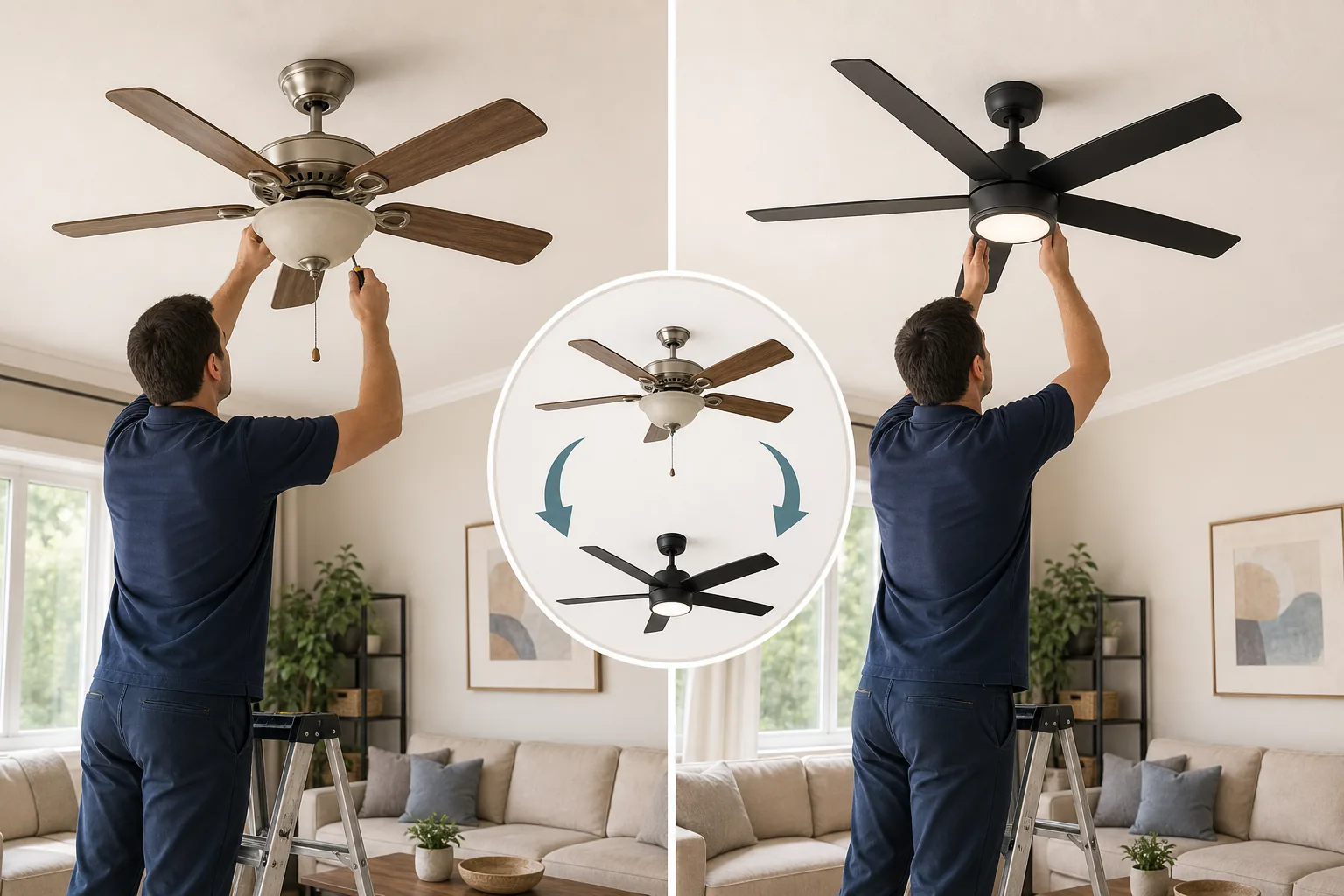
Central Coast estimates commonly place this work around $200 to $450 per fan, while broader fitting guides list about $150 to $400 where the wiring and fixing point are suitable. Labour is often around 30 to 60 minutes for a straightforward replacement by a licensed electrician.
The words “like-for-like” can hide a few changes. A new fan may have a remote instead of a wall controller. It may include a light that needs a different switch arrangement. The blade span may also be larger, which can affect clearances and the strength of the ceiling support.
Before the electrician arrives, confirm the fan model and its mounting parts. Some fans include the needed bracket. Others need a separate mounting component, longer rod or additional ceiling support. A missing part can turn a short job into a return visit and increase the final installation cost.
Room size matters as well. A fan that is too small may move little air. One that is too large may sit too close to a wall or feel out of place. The electrician can check the intended position and clearances, but the buyer still needs to choose a suitable product for the room.
Motor type can also affect the supply cost. Compare the product specifications and features when choosing a fan for the room.
Do not judge the quote by labour time alone. The electrician still needs to isolate the circuit, inspect the mount, connect the fan and test the finished work. A cheap swap that ignores the support point is poor value and may create a safety issue.
If you are replacing a fan during a broader renovation, combine the work with any wiring changes already planned. Fusion Projects handles renovation rewiring on the Central Coast, which can help avoid opening the same ceiling twice.
5. Multiple Fans and Dedicated Circuits, for whole-home cooling
Multiple fans can lower the per-fan labour cost, but the ceiling fan installation cost for a whole-home plan may be affected by circuit limits. A Central Coast electrician needs to assess the number of points and the load already on the lighting circuit.
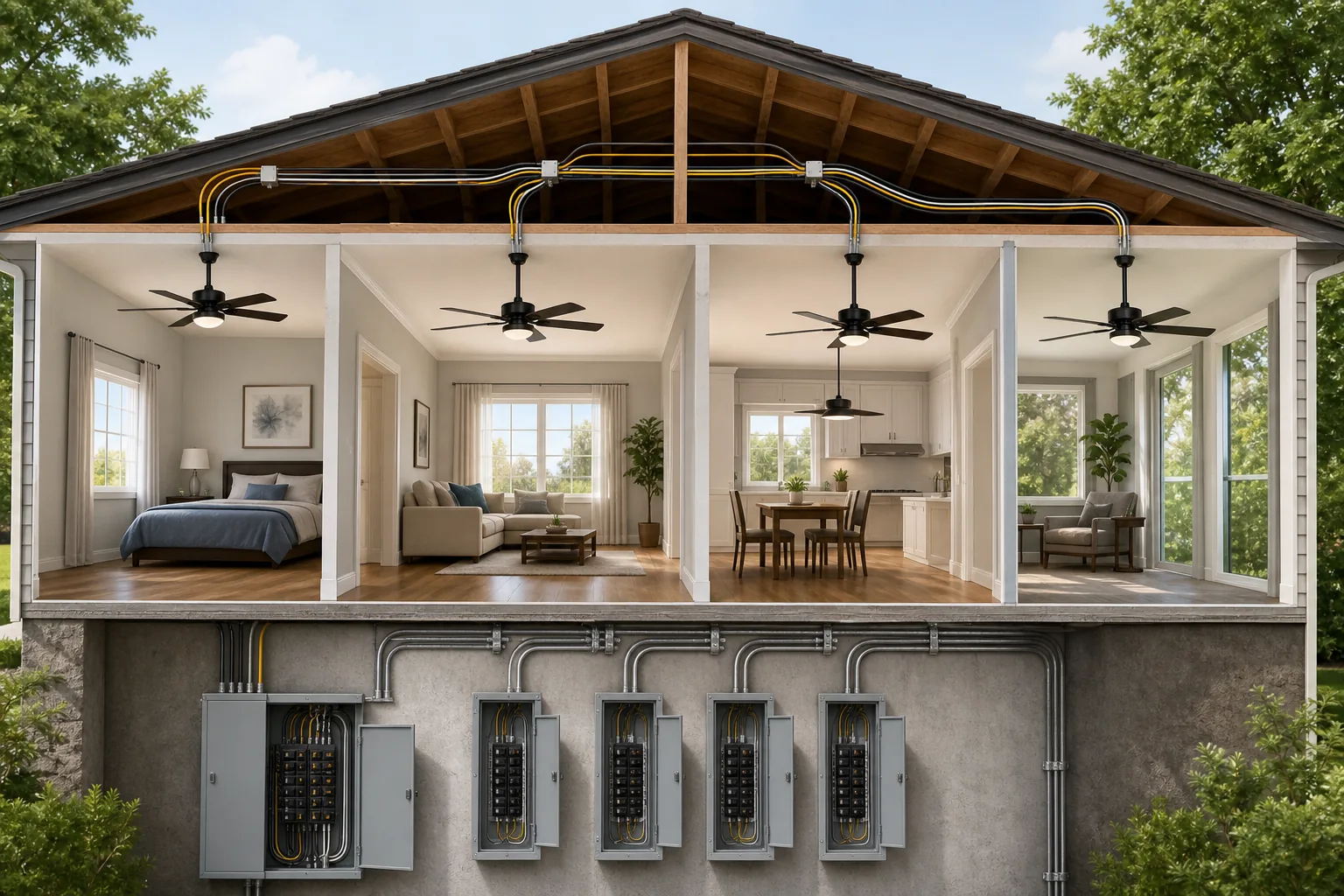
One ceiling fan normally adds a small load compared with a large appliance. The issue is often the total number of lights, fans and other points already connected. An older home with many downlights may have less spare capacity than expected, which can influence the overall ceiling fan installation cost.
A dedicated circuit may be needed when several fans are added or when the existing circuit is near its limit. The add-on may be around $300 to $600. That may include extra cable, protective equipment and work at the switchboard, but the written quote should state the exact scope and expected ceiling fan installation cost.
Multiple fans also raise planning questions. A long open living area may need two smaller fans instead of one large unit. Bedrooms may need separate controls. A fan in an alfresco area needs a suitable outdoor rating, especially in coastal suburbs such as Avoca Beach or Terrigal.
The best time to check capacity is before the fans are bought. If the switchboard has no spare space, the electrician may suggest a board change or another approved arrangement. A switchboard upgrade is a separate job, so it should not appear as an unexplained surprise on the installation invoice.
Smart controls add another layer. A remote can be simple for a bedroom fan. Advanced smart control may need compatible equipment and a stable circuit. Fusion Projects also works with smart home wiring and fan control planning when the fan is part of a wider home system.
Plan the visit around the whole house. Grouping four fans may reduce repeated travel and setup time, but it will not remove the cost of new cable runs, braces or access equipment. A quote should price each fan and list shared work separately, making the ceiling fan installation cost easier to compare.
There is no need to assume a Level 2 electrician is required for ordinary ceiling fan work. Level 2 work is aimed at specific network connection and service tasks, not a normal internal fan point. For standard installations, a licensed Central Coast electrician can assess the wiring, mounting and controls.
Ceiling Fan Installation Cost Comparison
The figures below explain the decision behind each ceiling fan installation cost range. They are more useful than a single average because the same fan can need very different work in two Central Coast homes.
| Installation option | Typical guide range | Best fit | Main cost risk |
|---|---|---|---|
| Existing wiring | $150 to $300 per fan | Suitable point already exists | Old cable or weak support |
| Standard replacement | $200 to $450 per fan | Like-for-like retrofit | New controls or fan light |
| New fan point | $350 to $700 or more | No wiring at the chosen spot | Long cable route or poor access |
| High or cathedral ceiling | Varies with access and parts | Double-height or angled room | Scaffold, rods or brackets |
| Several fans | Per-fan rate may fall | One planned visit | Dedicated circuit or switchboard work |
Treat broad price ranges as a market reference, not a fixed quote. A high ceiling or new point can move the ceiling fan installation cost well outside a typical range.
The most useful comparison is scope. A $250 quote may exclude fan supply, while a $500 quote may include a fan, new support and a longer cable run. Put both quotes beside the same job description before choosing a licensed Central Coast electrician. For a clear assessment of wiring, mounting and switchboard requirements, Fusion Projects can help compare the full ceiling fan installation cost rather than just the labour line.
What to Check Before Accepting a Ceiling Fan Installation Cost Quote
A clear ceiling fan installation cost quote should show exactly what you are paying for. If it only says “install ceiling fan”, ask for more detail before accepting it.
Confirm the work area
State the Central Coast suburb, room and ceiling type. Say if the room is single-storey, whether roof access exists and if the ceiling is raked or cathedral style. A photo from the floor can help, but it cannot replace an inspection where access is difficult.
Confirm the electrical scope
Ask if the ceiling fan installation cost includes the following:
- Removal and disposal of the old fitting
- New cable or a new fan point
- Ceiling bracing or a mounting upgrade
- Wall switch or other control
- Testing after the fan is installed
- Any access equipment or extra materials
Check the fan itself
Write down the exact model, blade span, motor type and whether it has a light. If you are supplying the fan, confirm that it has the correct mounting hardware and is suitable for the room. Outdoor and coastal locations around Terrigal, The Entrance and Avoca Beach need extra care with the product rating.
Ask about compliance records
Fixed electrical work in NSW must be completed by a licensed electrician. Ask what certificate or record will be supplied after the work. The electrician should also explain any defect found in the old wiring or ceiling support.
Fusion Projects provides electrical work across the Central Coast, with wider service coverage into Newcastle and Sydney for suitable projects. Its Central Coast electrician service is the sensible place to start when the ceiling fan installation cost may connect with lighting, switchboard work or other fixed wiring.
Finally, check the payment terms and what happens if the site differs from the description. A variation should be explained before extra work starts. That is a better safeguard than chasing the lowest initial ceiling fan installation cost.
FAQ
How much does ceiling fan installation cost in NSW?
Ceiling fan installation cost in NSW is often about $150 to $350 per fan when suitable wiring already exists. A like-for-like replacement may sit around $200 to $450. New wiring, ceiling bracing or high ceilings can push the job to $350 to $700 or more, depending on access and the work required. Fusion Projects can assess the ceiling, wiring and support point before providing a clear quote for homes across the Central Coast.
Do I need a licensed electrician to install a ceiling fan?
Yes, a licensed electrician should install a hardwired ceiling fan in NSW. The work connects to fixed mains wiring and may involve mounting a heavy, moving fitting. A qualified Central Coast electrician can isolate the circuit, check the support point, complete the wiring and test the finished installation. This helps ensure the fan, switch and any existing lighting operate safely and comply with Australian electrical requirements.
Is it cheaper to install several ceiling fans at once?
Installing several fans during one visit can reduce the labour cost per fan. The electrician can prepare once and move between rooms, which may make the overall ceiling fan installation cost more efficient. It will not remove the cost of new wiring, ceiling braces, high access or a dedicated circuit. Ask for each fan and all shared work to be shown separately, particularly when planning a renovation rewire or multiple-room upgrade.
Does a high ceiling increase ceiling fan installation cost?
Yes, a high ceiling can increase ceiling fan installation cost because the electrician may need an extension rod, scaffold or other safe access equipment. A raked ceiling may also need additional mounting hardware. The added price depends on the ceiling height, room layout and whether roof access is available. A site assessment in areas such as Gosford, Wyong or Terrigal can identify access requirements before work begins.
Do ceiling fans need a Level 2 electrician?
Most standard ceiling fan installations do not need a Level 2 electrician. A normal indoor fan point is usually handled by a licensed electrician. Level 2 service work may only enter the discussion if a separate network, overhead supply or connection issue exists. Fusion Projects is Level 2 ASP accredited and can identify whether the fan installation is a straightforward electrical job or whether additional supply work needs attention.
Conclusion
For most Central Coast homes, start with the existing-wiring option and budget around $150 to $350 per fan before the site is checked. Choose Fusion Projects when you want the mounting point, wiring and controls assessed together. Send the room details and fan model first, then request a written scope that separates standard fitting from any new wiring or access work.
Where Fusion does this work. Fusion handles lighting, power points & switches across the Central Coast from our Tuggerah workshop, including Wyong. See every suburb we cover, or call 0413 684 874 for a free on-site quote.