Smart Home and Home Automation on the Central Coast: A Practical Guide
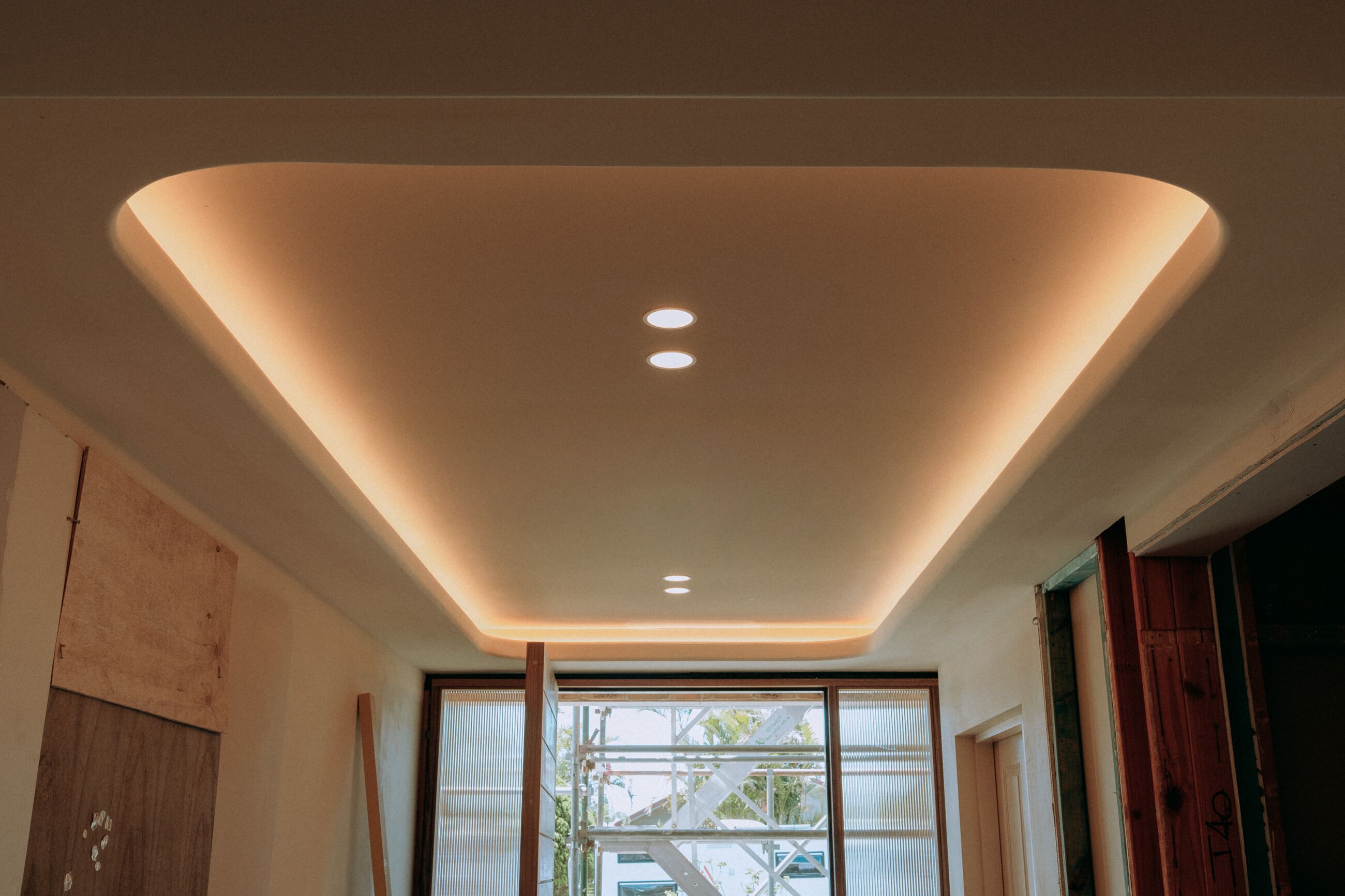
If you live on the Central Coast and you have started thinking about a smart home, you are not alone. More homeowners across Tuggerah, Terrigal, Gosford and Erina are adding smart lighting, security cameras and app-controlled climate to their homes, and most of it sits on top of one thing that is easy to overlook: the wiring behind the walls. This guide walks through what home automation actually covers, where a licensed electrician fits in, and how to plan it properly whether you are renovating, building new, or upgrading the home you already have.
What home automation actually covers
Home automation is a broad term, and it helps to break it down into the parts you can actually see and use day to day. Most setups are built from a mix of the following:
- Smart lighting: dimmable downlights, scenes for different times of day, and lights that turn on automatically when you arrive home or a sensor detects movement.
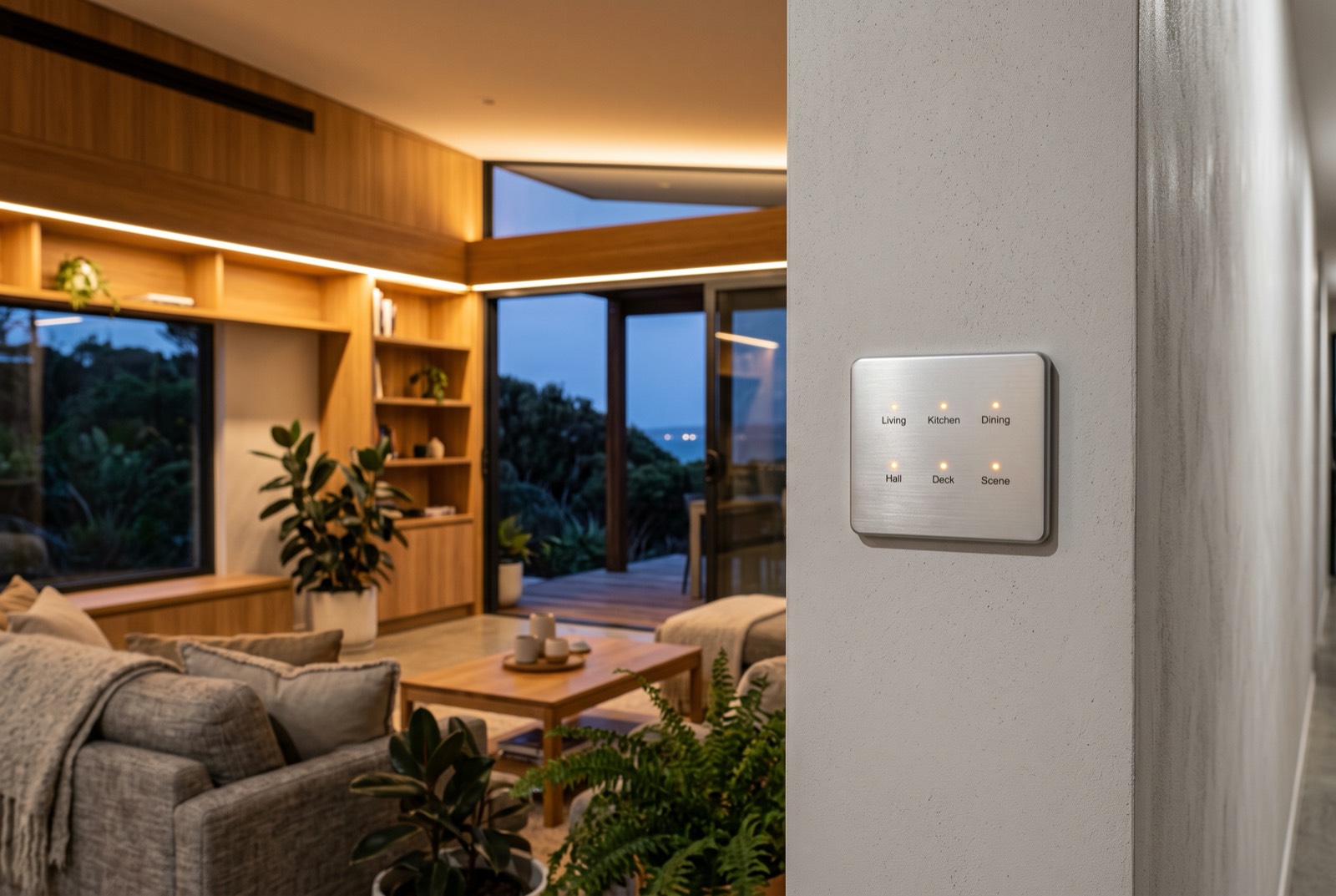
- Smart switches and dimmers: replacements for standard wall switches that can be controlled by app, voice or schedule while still working as a normal switch on the wall.
- Smart power: controlled power points and circuits so you can switch appliances, pool pumps or hot water on and off remotely or on a timer.
- Security cameras and intercoms: hardwired cameras, video doorbells and intercoms that let you see who is at the door from your phone.
- Smart climate: controllers for heating, cooling and ceiling fans that adjust to a schedule or to the temperature in each room.
- Automated blinds and shades: motorised window coverings that open and close on a schedule or with the sun, handy for west-facing rooms that cop the afternoon heat.
- Voice and app control: the layer that ties it together, so you can run everything from a phone, a wall tablet or a voice assistant.
You do not need all of these at once. The point of listing them is to show how the pieces connect, because the decisions you make on the wiring side early on will decide how far you can take it later.
Why the electrical side needs a licensed electrician
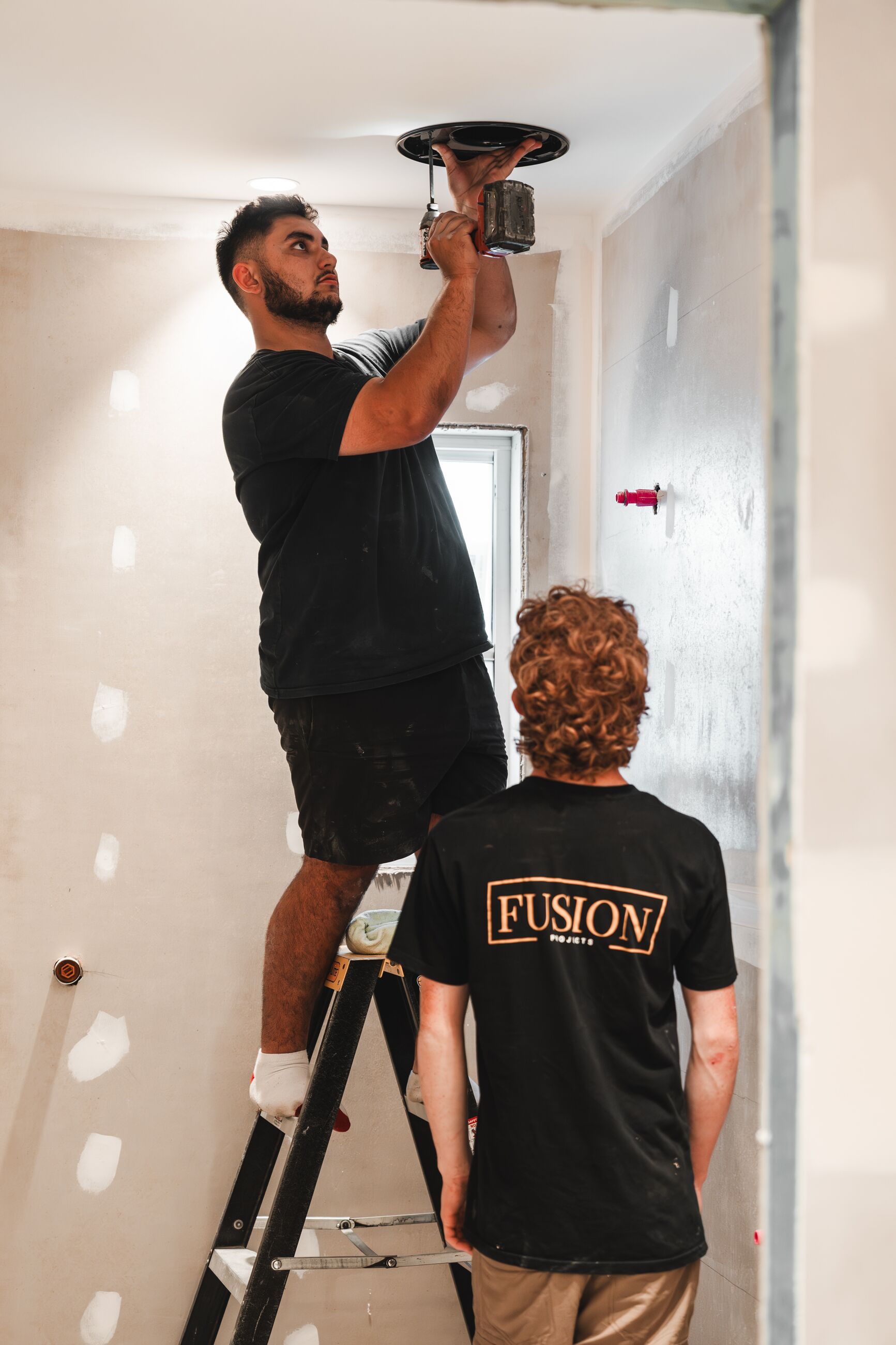
Plenty of smart products are sold as plug-and-play, and some genuinely are. The trouble starts at the wall. Smart switches, hardwired cameras, controlled circuits and motorised blinds all connect to your fixed wiring, and in New South Wales that work must be done by a licensed electrician. It is not just a rule for the sake of it, getting it wrong can mean nuisance tripping, switches that buzz or fail, or a safety risk that does not show up until much later.
There is also the question of how a smart device behaves on a real circuit. Many smart switches and dimmers need a neutral wire at the switch, and a lot of older Central Coast homes simply do not have one there. An electrician can confirm what you have behind the wall before you buy anything, which saves you from ordering a stack of switches that will not work in your house. This is the core of any proper smart home installation: matching the gear to the wiring you actually have, not the wiring the box assumes.
Level 2 work and the bigger picture
Some automation plans touch the parts of your electrical supply that sit between the street and your meter, things like upgrading your service or adding capacity. That is Level 2 ASP work, and it can only be done by an accredited Level 2 electrician. If your automation plans are ambitious, it pays to work with someone who can handle both the inside-the-home wiring and the supply side, so the whole job is coordinated rather than stitched together by two different trades.
New build or renovation versus retrofitting
The single biggest factor in how easy automation is to install is whether the walls are open. When you are building new or in the middle of a renovation, cabling is cheap and simple, the electrician can run data and power exactly where you want it before the plasterboard goes up. This is the moment to think ahead, even if you are not installing every smart feature on day one.
Retrofitting into a finished home is still very doable, it just calls for smarter choices. A good electrician will lean on wireless smart switches, mesh devices and tidy cable routes through the roof space and wall cavities to avoid cutting up your home. Plenty of Central Coast homes have been automated this way without a single sheet of plaster being replaced. The trade-off is that some options, like fully hardwired cabling to every room, are harder once the walls are closed, so the planning conversation matters more.
Planning ahead even if you start small
If you are renovating, the cheapest future-proofing you will ever do is running spare conduit and a few extra cable runs while the walls are open. Even if you only install smart lighting now, having the infrastructure in place means adding cameras, a wall tablet or automated blinds later is a quick job rather than a renovation in its own right.
Getting the infrastructure right
Behind every smooth-running smart home is infrastructure that was thought through properly. Three things matter most:
- Wiring: the right cable to the right places, with enough spare capacity to add devices later. Hardwired connections for cameras and key devices are more reliable than relying on wireless for everything.
- Network: smart devices lean heavily on your home network. A strong, well-placed Wi-Fi setup, and ideally some hardwired data points, keeps cameras and controllers responsive instead of dropping out.
- Switchboard capacity: more circuits and more devices put more demand on your switchboard. Older boards with ceramic fuses or limited space often need attention before a larger automation setup goes in.
The switchboard is the part people forget. If yours is dated or already full, a switchboard upgrade is often the sensible first step, giving you the safety devices and the room to grow that a modern smart home relies on. It is far easier to do this once, up front, than to keep working around a board that has run out of space.
A practical example for a Central Coast home
Picture a typical brick-and-tile home in Berkeley Vale or Kincumber. The owners want to start simple: smart lights in the main living areas, a video doorbell, and a couple of cameras covering the driveway and back yard. An electrician checks the switchboard, confirms there is a neutral at the key switch locations, upgrades the board to make room for the new circuits and safety switches, then installs the smart switches and hardwires the cameras to a tidy, reliable setup.
Six months on, the same owners decide to add motorised blinds in the west-facing lounge and a controller for the air conditioning. Because the groundwork was done properly the first time, spare capacity at the board, a solid network, and cabling left in place, the second stage is straightforward. That is the payoff of planning the infrastructure once and building on it in stages.
How to start small and expand
You do not need to automate the whole house in one go, and most people should not. A sensible path looks like this:
- Start with one area or one feature that solves a real annoyance, smart lighting in the living room, or a video doorbell.
- Get the infrastructure right early, so the switchboard and network can support more later.
- Add the next layer when you are ready, whether that is cameras, climate control or automated blinds.
- Keep it on a system that plays well with the voice or app control you already use, so it stays simple to run.
Starting small also lets you live with each stage and learn what you actually use, rather than paying for features that sit idle. The homes that work best are usually the ones that grew step by step on solid foundations.
Frequently Asked Questions
Do I need a licensed electrician for smart home devices?
For anything that connects to your fixed wiring, smart switches, hardwired cameras, controlled circuits, motorised blinds, yes. In New South Wales that work has to be done by a licensed electrician. Plug-in devices like a smart speaker or a plug-in smart plug you can do yourself, but the wiring behind the wall is electrical work.
Can my older Central Coast home be automated, or do I need to rewire?
Most older homes can be automated without a full rewire. The main thing an electrician checks is whether there is a neutral wire at your switches, which some smart switches need, and whether your switchboard has room for new circuits. Where hardwiring is tricky, wireless smart devices fill the gap. A site visit will tell you exactly what your home can support.
Should I get the wiring done during my renovation?
If the walls are open, yes, it is by far the easiest and most cost-effective time to run cabling and leave spare capacity for the future. Even if you only plan to install a few smart features now, putting the infrastructure in during a renovation saves a much bigger job down the track.
Will I need a switchboard upgrade for a smart home?
It depends on your current board. If it is older, full, or still running ceramic fuses, it often needs upgrading before a larger automation setup goes in, both for safety and to make room for new circuits. A smaller setup may be fine on your existing board. An electrician can assess it and let you know.
Where should I start if I am new to home automation?
Pick one feature that solves a daily annoyance, smart lighting or a video doorbell are common starting points, and make sure the infrastructure behind it can support more later. Starting small lets you learn what you actually use before expanding.
Talk to a local electrician about your smart home
Home automation works best when the electrical groundwork is done properly from the start. Fusion Electrical & Carpentry are licensed Central Coast electricians with 16+ years of experience, Level 2 ASP accreditation and 92 five-star Google reviews, and we offer 24/7 emergency response across Tuggerah, Terrigal, The Entrance, Gosford, Wyong, Erina, Kincumber and Berkeley Vale. Whether you are planning a full smart home during a renovation or starting with a single room, we can get the wiring, network and switchboard right so your system runs reliably and grows with you. Contact Fusion for a free quote and let us talk through what would work best for your home.
Where Fusion does this work. Fusion handles smart home installation and data cabling, CCTV & security across the Central Coast from our Tuggerah workshop, including Gosford and Wyong. See every suburb we cover, or call 0413 684 874 for a free on-site quote.