EV Charger Installation on the Central Coast: What Actually Decides Your Quote
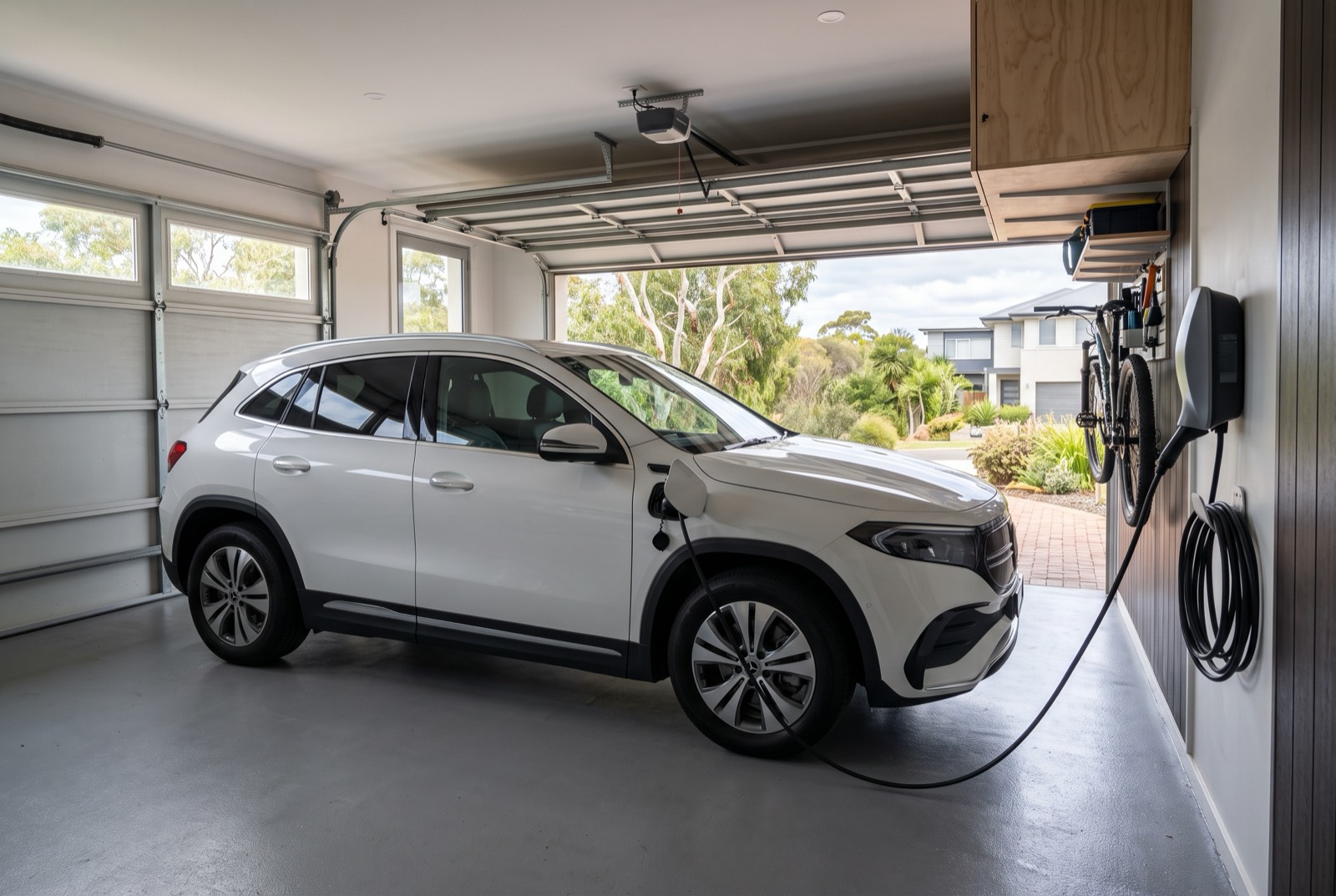
Most home EV chargers on the Central Coast go in as a 7kW single phase unit wired back to the switchboard on its own circuit, and the job usually takes a licensed electrician most of a day. What changes the price is not the charger itself, it is how far your switchboard is from where the car parks, whether that board has room and a main switch rated to cope, and whether you are on single or three phase.
So before you ring anyone, it helps to know what they are going to ask you.
The four things that set the price
1. Distance from switchboard to parking spot
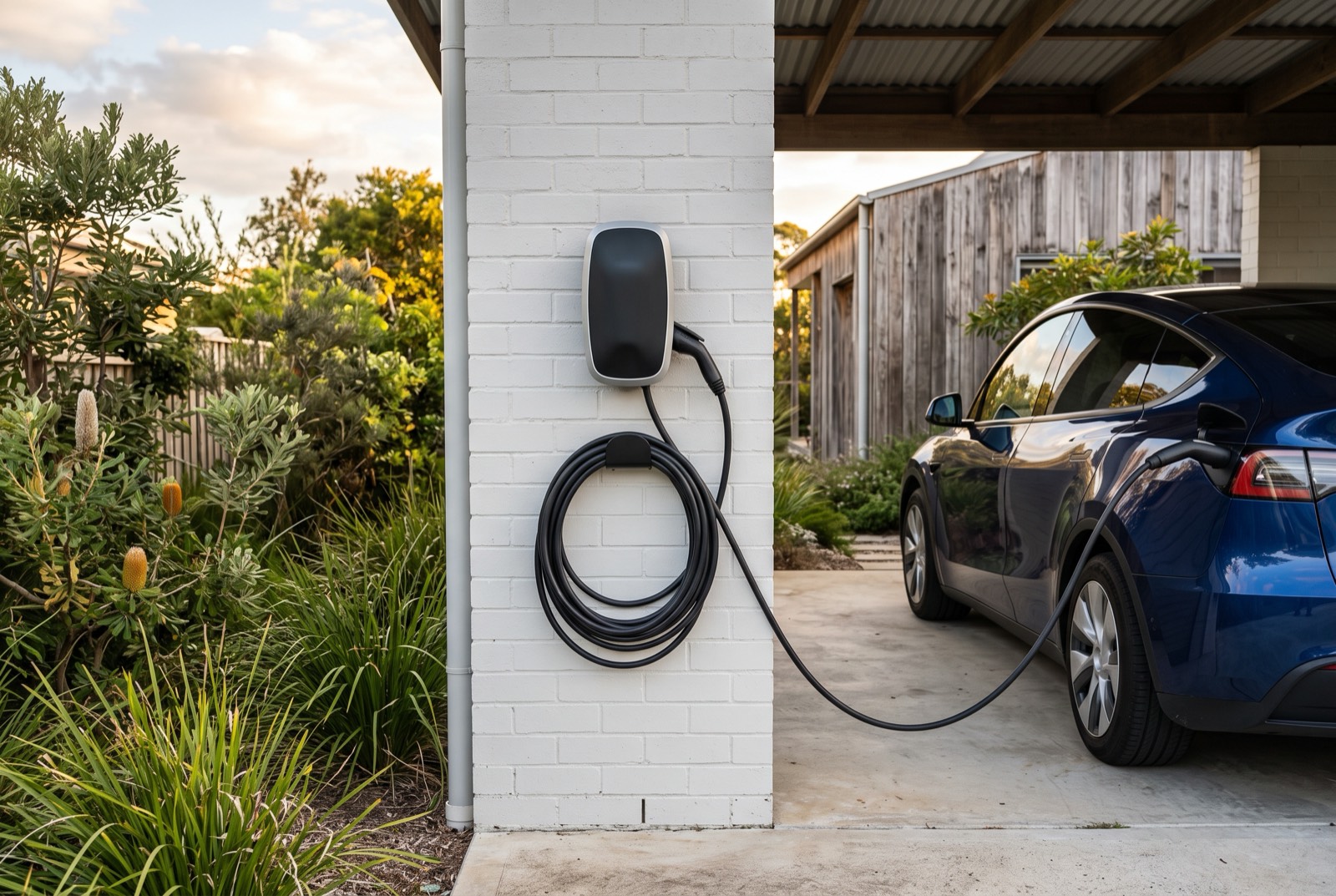
This is the big one. A charger mounted on the garage wall three metres from the board is a short run in conduit and a couple of hours of labour. A charger at the end of a carport across the yard, with the board on the far side of the house, means a longer cable in heavier gauge, possibly a trench, and possibly a whole extra day.
Walk it out yourself before the site visit. Where does the car sit? Which side is the charge port on? Where is the meter box? A tape measure and a rough number will make every quote you get more accurate.
2. What your switchboard looks like inside
Older homes around Woy Woy, Umina, Toukley and the older Gosford streets often still have ceramic fuses or a board with no spare ways. An EV charger needs its own circuit breaker and RCD protection, and current wiring rules require an RCD on new circuits regardless. If there is no space, the board needs extending or replacing, and that is a separate line item worth several hundred dollars or more depending on what is found.
A good sparky will photograph the inside of your board before quoting. If someone quotes over the phone without seeing it, treat the number as a guess.
3. Single phase or three phase
Most Central Coast homes are single phase. That caps you at about 7kW, which adds roughly 40km of range an hour and fills nearly any car overnight. That is genuinely enough for almost everyone.
Three phase supply lets you run an 11kW or 22kW charger. If you already have three phase to the house, using it is often only slightly more expensive because the wiring is already there. Upgrading from single to three phase purely for a charger is rarely worth it: it involves the network, new mains, possibly a new meter, and a serious cost jump for time you spend asleep anyway.
4. Load management and your main supply
Add a 32A charger to a house that already has ducted air conditioning, an electric hot water system and an induction cooktop, and you can push past what your main supply is rated for. The fix is usually not an upgrade. It is a load management device or a charger with built in dynamic load balancing, which uses a clamp on your mains to throttle the car back when the rest of the house is drawing hard. That is a modest add on and far cheaper than a supply upgrade.
The paperwork side on the Central Coast
Ausgrid is the network operator here. EV chargers above a certain size need to be notified to the network, and your electrician handles this as part of the connection process. You should also receive a Certificate of Compliance for Electrical Work (CCEW) once the job is finished. Keep it. It matters for insurance and it matters when you sell the house.
If you are in a strata block in Terrigal, Ettalong or anywhere with a shared basement, you need owners corporation approval before anything happens, and the cabling route through common property is the part that takes time, not the charger. Start that conversation early.
Choosing the charger itself
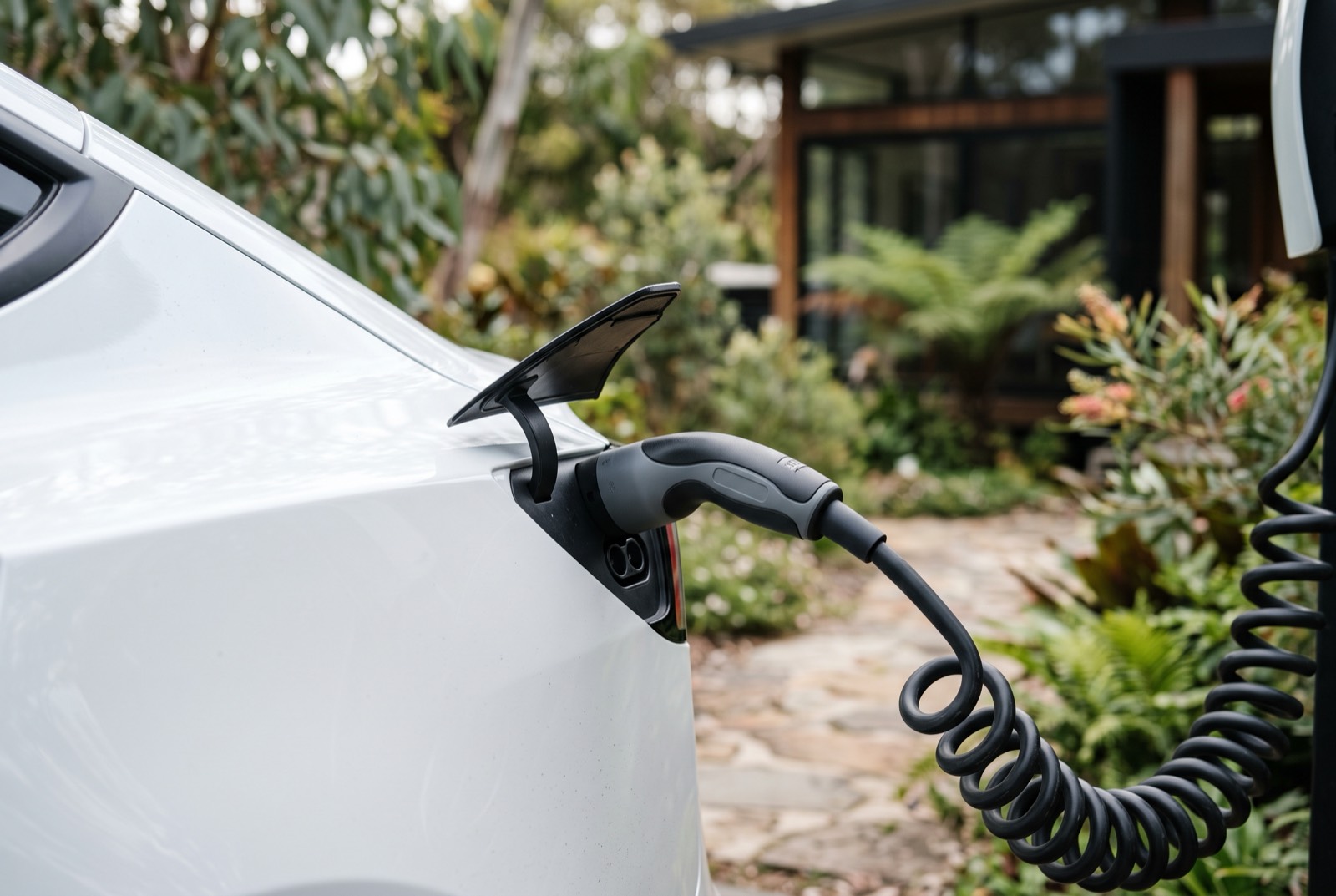
Tethered means the cable is permanently attached. Untethered means you plug your own cable in each time. Tethered is more convenient day to day, untethered is tidier and more future proof if you change cars.
Things worth paying for:
- Dynamic load balancing if your house is already electrically busy
- Solar integration if you have panels and want to charge on excess generation rather than grid power
- A proper outdoor rating if the unit is exposed, which on a coastal block also means thinking about salt air
- An app that works without a subscription
Things that matter less than the marketing suggests: 22kW capability on a single phase house, and screens.
If you have solar, ask specifically how the charger sees your inverter. Some do it neatly, some need an extra meter or gateway, and the difference shows up in the quote.
What a proper install actually involves
- Site visit, switchboard inspection, and a measured cable route
- Confirming the main supply can carry the load, or specifying load management
- Isolating supply and installing a dedicated circuit breaker and RCD at the board
- Running cable in conduit, often through the roof space or under the eaves, sometimes trenched
- Mounting the unit at a sensible height so the cable reaches without dragging on the ground
- Testing, commissioning, connecting to the app and setting charging limits
- Issuing the CCEW and any network notification
Step five sounds trivial and it is the one people regret. Have the installer hold the unit where they intend to fix it, then go and stand where your car parks and check the cable reaches your port without stretching.
Comparing quotes without getting caught
Ask every quote to state clearly:
- Whether the charger is supplied or you buy it
- Cable size and length, and whether the route is surface mounted, in roof, or trenched
- Whether switchboard work is included or excluded
- Whether network notification and the CCEW are included
- What happens if the board turns out to need more work than expected
The cheapest quote is often the one that has excluded the switchboard. That exclusion becomes a variation on the day.
A note on rebates
Rebates and incentives for home charging in NSW change, and some have closed. Do not commit based on something you read a year ago. Check the current NSW Government and Ausgrid pages yourself before you sign, and ask your electrician whether the specific charger model is on any approved list, because eligibility often depends on that.
FAQ
Can I just use the plug that came with the car?
You can, but a standard 10A power point gives you around 10 to 15km of range an hour and puts a household circuit under sustained load for many hours. It is fine as a backup. As a daily habit on an old circuit it is the sort of thing electricians get called out to after the fact. If you are using one regularly, at minimum have the circuit checked.
How long does the installation take?
A straightforward garage install near the board is often half a day to a day. Add switchboard replacement, a long trenched run, or strata common property and it can stretch across two visits. The site visit is what tells you which one you are.
Will it work if the power goes out?
No. A wall charger is grid connected and stops when the supply does. If you have a home battery, whether the charger keeps running during an outage depends entirely on how the battery and backup circuits are set up, so ask that as a specific question rather than assuming.
Where Fusion does this work. Fusion handles EV charger installation across the Central Coast from our Tuggerah workshop, including Tuggerah and Wyong. See every suburb we cover, or call 0413 684 874 for a free on-site quote.