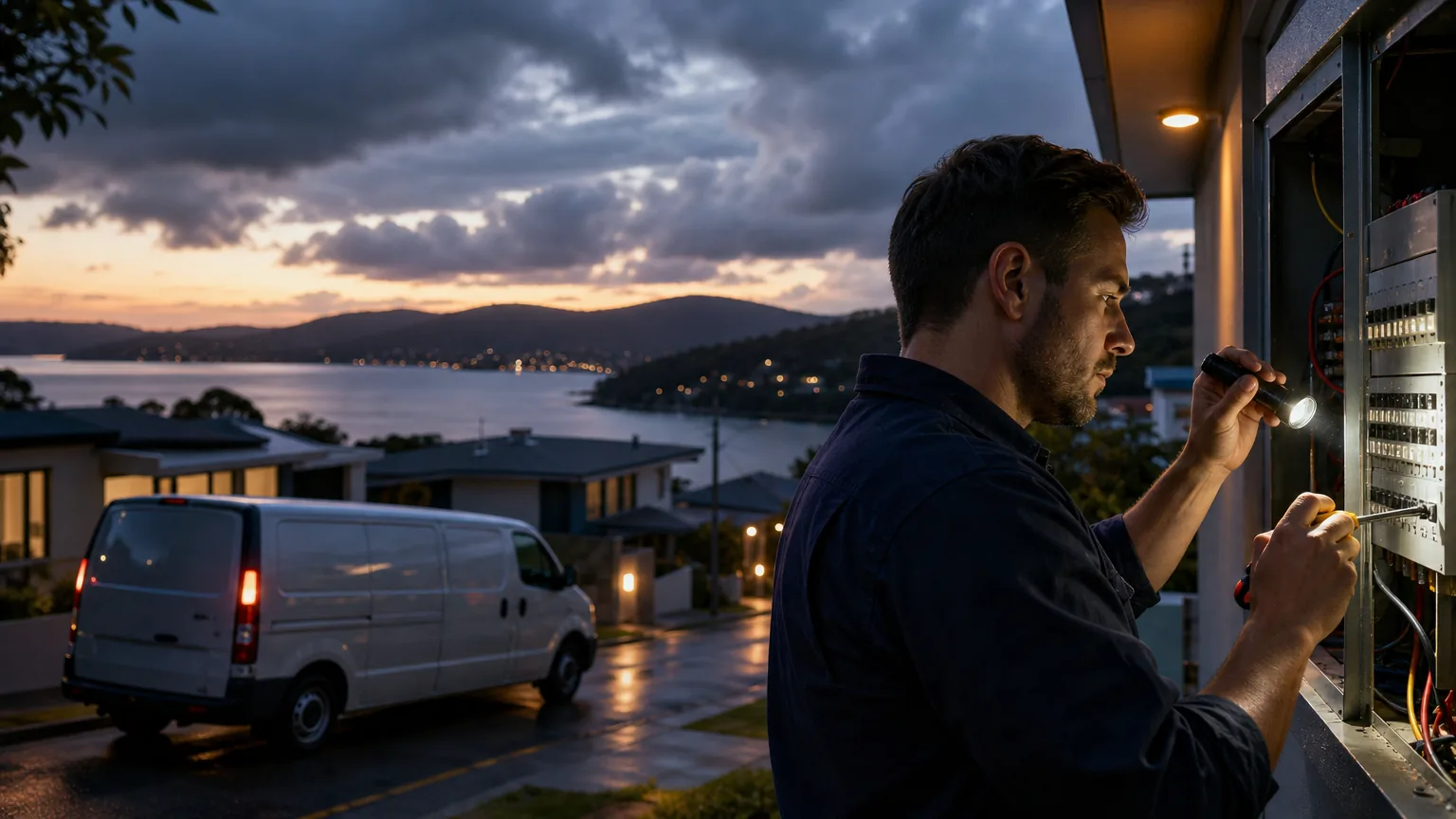
Emergency Electrician Central Coast: What to Do
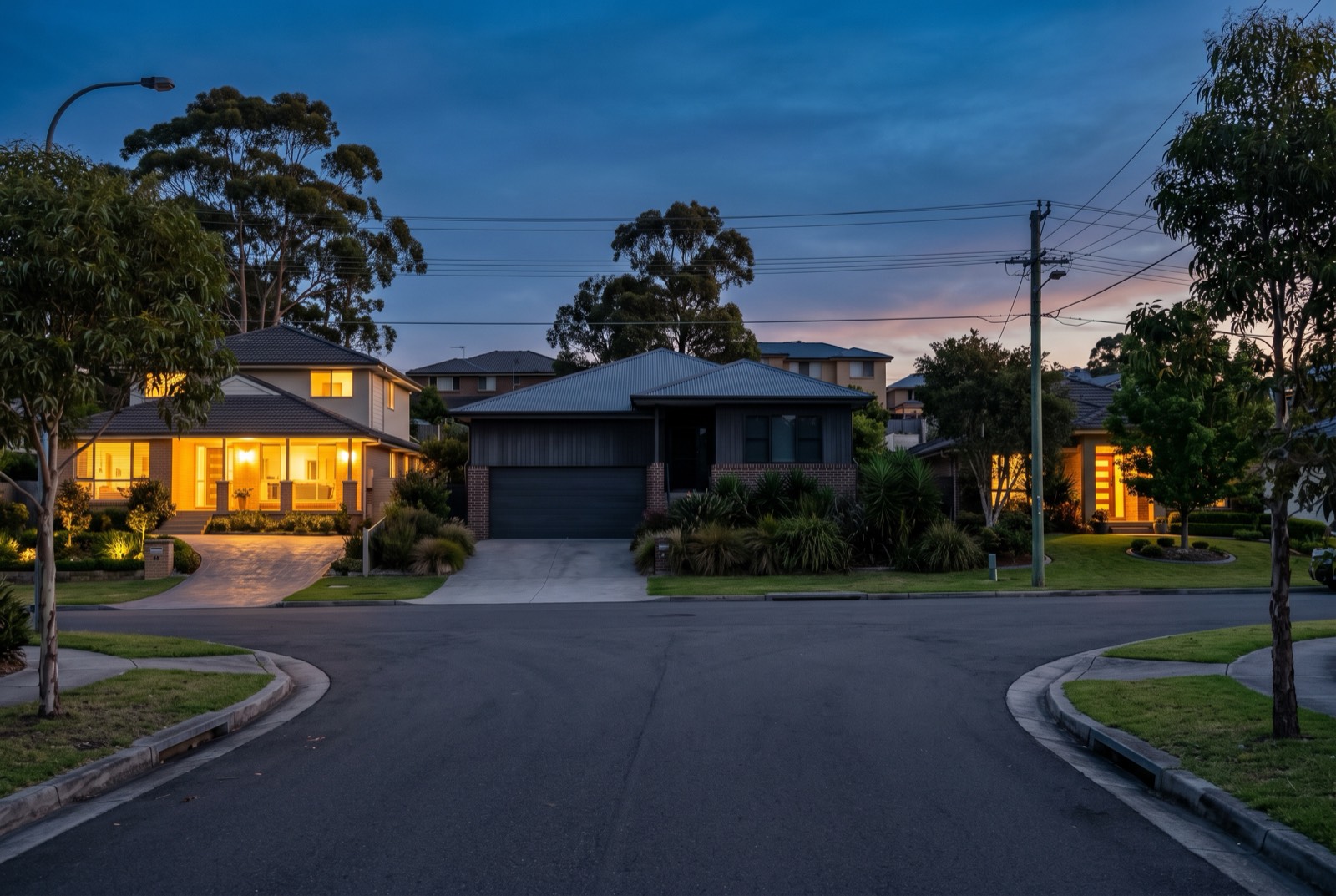
An electrical emergency can go from worrying to dangerous in minutes. If you’re smelling burning near a power point, watching your switchboard spark, or sitting in a dark house with no power and no obvious reason why, you need a licensed emergency electrician on the Central Coast, not a search results page. This guide tells you exactly what counts as a genuine emergency, what to do before help arrives, and what to expect when you call.
What Counts as a Genuine Electrical Emergency
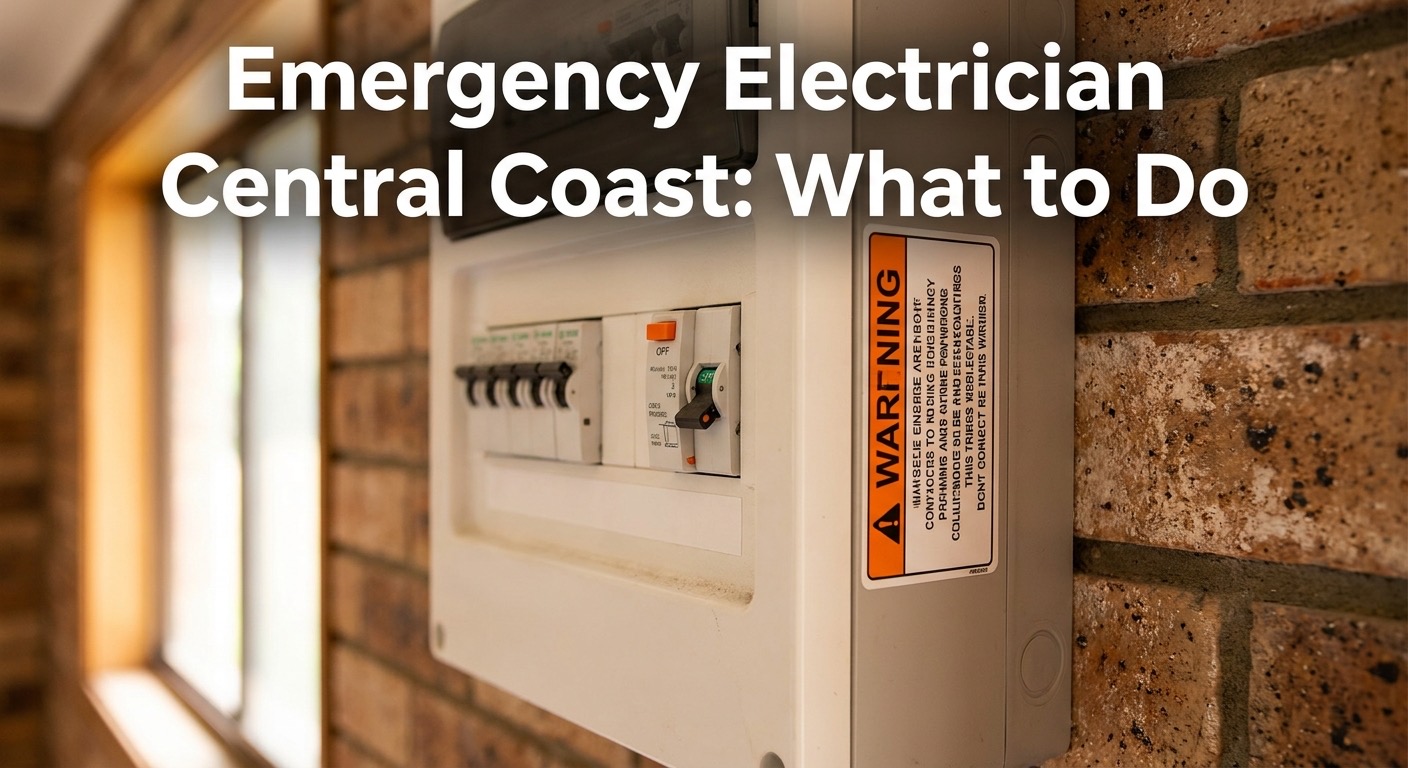
Not every electrical problem needs someone at your door at 2am. But some do. The test is simple: if you can smell it, see it, or hear it coming from your wiring, electrical safety principles are clear that you treat it as urgent until proven otherwise.
Here are the situations that count as genuine emergencies:
- Burning smell from a power point or switchboard. Overheating wires or melting insulation sit behind that smell. Turn off the main switch immediately and do not use that circuit again until a licensed electrician has inspected it.
- Sparks or scorch marks at an outlet. Temperatures behind the wall are high enough to cause internal damage. Continued use raises the risk of fire.
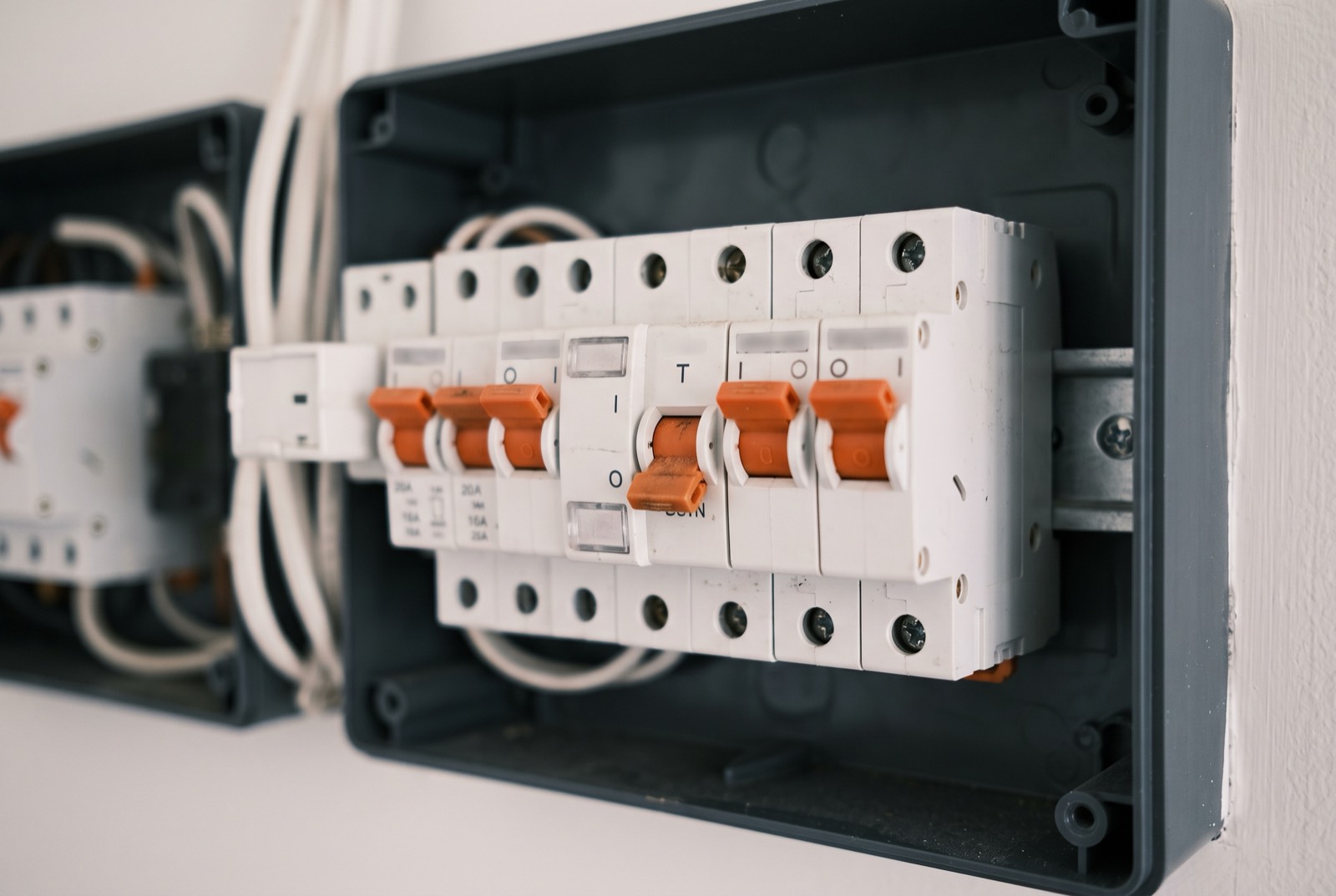
- Switchboard buzzing, hot to touch, or producing a burning odour. These are signs of arc faults or failing breakers. A switchboard that is running hot is not something to monitor overnight.
- Safety switch or circuit breaker tripping repeatedly. One trip means the switch did its job. Repeated trips on the same circuit signal an underlying fault that needs diagnosis, not just resetting.
- Total power loss or partial outage with no obvious cause. Half the house going dark could mean a failed circuit, a fault in the consumer mains, or a problem the network provider needs to fix. A Level 2 electrician can determine which.
- Electric shock from a tap, appliance, or fitting. This is an immediate emergency. There is a live current where there should not be one.
- Storm or water damage to wiring or the meter box. Water and electricity make a dangerous combination. If a storm has brought a powerline down near your property or water has entered your switchboard, keep everyone clear and call immediately.
- Fallen or damaged consumer mains. The cables running from the street to your meter box are energised. Do not touch them under any circumstances.
Flickering lights by themselves are not usually an emergency, though they can point to loose wiring worth investigating soon. A single tripped breaker that resets and stays on is generally not urgent. The moment there is heat, smell, sparks, or shock involved, the calculation changes.
What to Do Before the Electrician Arrives
The minutes between noticing a problem and the electrician arriving matter. A few careful steps can stop a small fault from turning into something far more serious.
Turn off the main switch if it is safe to reach
The main switch is usually at the top of your switchboard. Turning it off cuts power to your home’s circuits. Do this if there is a burning smell, repeated tripping, or you suspect a wiring fault. Don’t do it if the switchboard itself is smoking or the area around it feels warm to the touch. In that case, stay clear.
If there is smoke or flames, leave first
Get everyone out of the property and call 000. Then call your electrician from outside. No electrical fault is worth staying inside a burning or smoke-filled building to investigate. Once the fire service has cleared the property, your electrician can assess the damage.
Don’t reset a breaker that keeps tripping
It is tempting to keep flicking a tripped switch back on, especially when it controls the fridge or the hot water. Resist it. A breaker that trips repeatedly is telling you something is drawing too much current or there is a fault on that circuit. Forcing it back on risks making things worse.
Keep clear of damaged or exposed wiring
If a storm has damaged the cables running into your property, treat every conductor as live. The same applies to any fitting with scorch marks or visible burn damage. Don’t touch it, don’t put anything near it, and keep children and pets away.
Take a photo if it is safe to do so
A quick photo of the tripped switchboard, the scorched outlet, or the damaged cable helps your electrician triage the fault before they arrive. It means they come prepared with the right equipment and have a clearer picture of what they are walking into.
Write down when it started and what happened first
Did the power go out right after you switched on a new appliance? Did the burning smell start before or after the lights flickered? That sequence tells an experienced electrician a lot about where to look. A quick mental note, or a few words on your phone, saves time on arrival.
For homeowners in Gosford, Wyong, Erina, or The Entrance, Fusion Projects’ 24/7 emergency electrical service covers the full Central Coast, so response times are kept short regardless of where you are.
Common Electrical Emergencies on the Central Coast
The Central Coast has its own set of conditions that push electrical systems harder than average. Coastal salt air accelerates corrosion in outdoor fittings and meter boxes. Older housing stock in suburbs like Gosford, Long Jetty, and Bateau Bay often has wiring that was installed before modern safety standards. Storm season brings the risk of falling lines and water ingress. These are not abstract risks, they show up regularly in emergency callouts.
Power keeps tripping
This is one of the most common calls. A circuit or safety switch that trips once and resets fine is usually doing its job. When it trips every time a specific appliance runs, or trips with nothing obvious drawing power, there is a fault on that circuit. Common causes in Central Coast homes include overloaded circuits from added appliances, deteriorated wiring insulation, and moisture affecting outdoor or coastal installations. A fault-finding electrician will test the circuit systematically to find exactly where the problem lies, rather than guessing and replacing parts unnecessarily.
Switchboard sparking or overheating
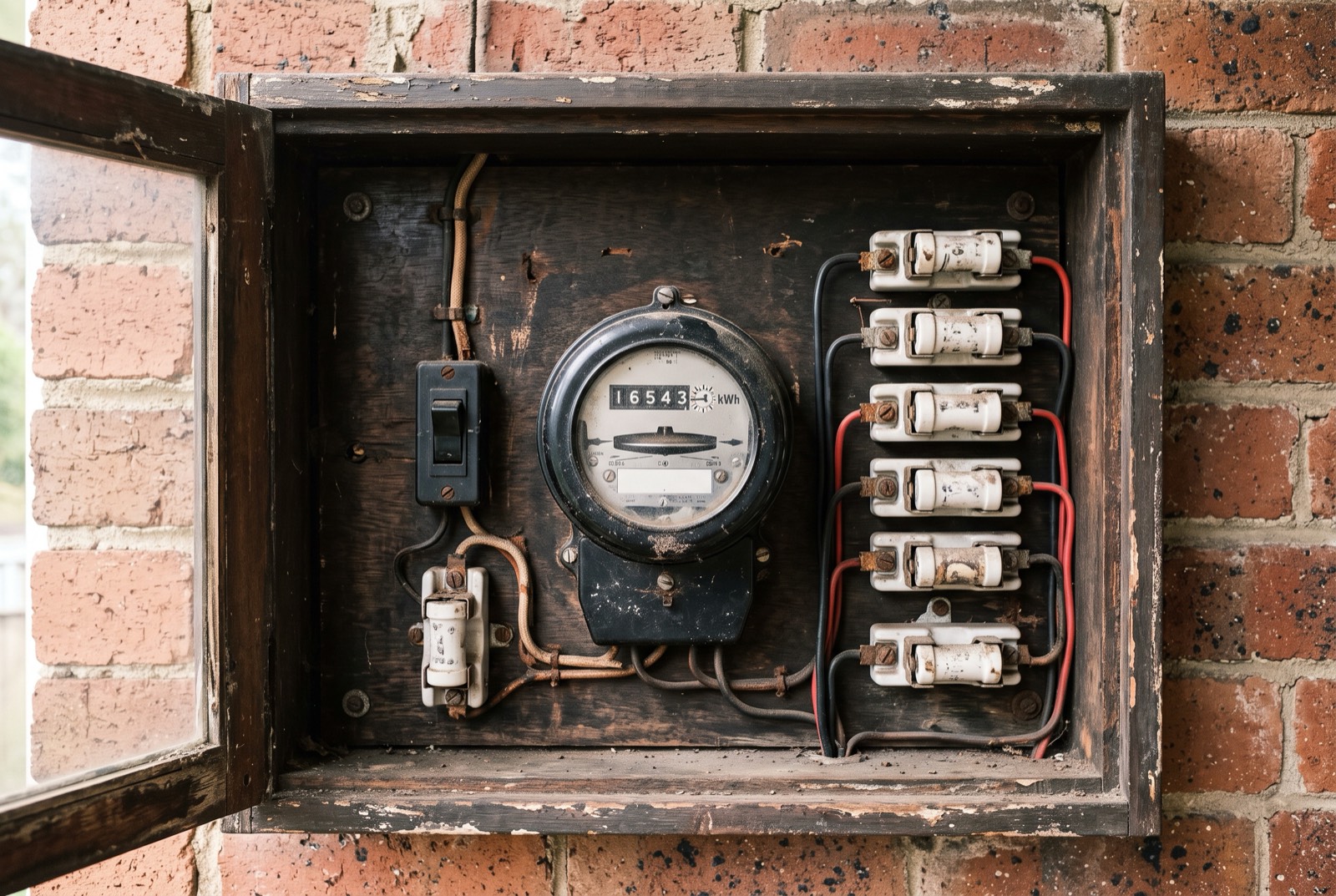
A switchboard that buzzes, feels warm, or produces any smell needs attention the same day. Older switchboards in properties around Terrigal, Avoca Beach, and Niagara Park sometimes still carry ceramic fuses rather than circuit breakers. These offer far less protection and can fail in ways that generate serious heat. A sparking switchboard is not a problem to book in for next week.
No power to half the house
Partial power loss usually means one phase has failed, a main circuit breaker has tripped, or there is a fault in the consumer mains. In some cases it is a network issue outside the property boundary. Only a Level 2 ASP-accredited electrician can work on the consumer mains side of your meter, so this is one fault where accreditation matters directly to your outcome.
Burning smell or scorch marks at a power point
This is among the more urgent scenarios. Scorch marks mean heat has built up behind the wall, either from a loose connection arcing or wiring that is failing. Unsafe electrical installations must be made safe by a licensed electrician. DIY investigation of a scorched outlet is both illegal and genuinely risky.
Storm and water damage
After a heavy storm on the Central Coast, a common callout involves water in the meter box, a damaged service mast, or a tree branch that has clipped the overhead supply cables. All of these fall into Level 2 territory. If you can see the service cables from the street to your meter box are damaged or have come away, keep the whole area clear and call for a Level 2 electrician immediately.
Electric shock from a tap or appliance
A tingle or shock from a metal tap, a washing machine, or any grounded appliance is a sign of stray voltage. It usually means a faulty appliance or a wiring fault somewhere on the earthing system. Don’t assume it’s a one-off. Call an electrician the same day.
Why Level 2 ASP Accreditation Matters in an Emergency
Most homeowners assume any licensed electrician can fix any electrical problem. That’s not quite right. In NSW, the work is split into two categories based on where the fault sits.
A standard licensed electrician can work on everything inside your property: the circuits, the switchboard, the wiring between rooms, and the fittings. But the section of cable from the street to your meter, called the consumer mains, is network infrastructure. Only an Accredited Service Provider (ASP) who holds a Level 2 accreditation is authorised to work on it.
This matters in emergencies because some of the most urgent faults, including a damaged service mast after a storm, a failed main fuse, and a consumer mains cable fault, sit exactly in that Level 2 zone. If you call an electrician who isn’t Level 2 accredited, they will diagnose the problem and then tell you they can’t fix it. You then need to call someone else. In a genuine emergency, that delay costs you.
It also matters for switchboard work that involves the network connection point. Upgrading a main switch, installing a new metering arrangement, or reconnecting supply after damage all require Level 2 authorisation. Choosing an electrician without it means the job either stops partway through or gets handed off.
The usable rule is this: for any fault that might involve the meter, the consumer mains, or the connection from the street, call a Level 2 ASP-accredited electrician from the start. It saves a second callout fee and gets the problem resolved in one visit.
Research across Central Coast emergency electricians found that only around 55% hold Level 2 and ASP accreditation. That means roughly half of the operators advertising 24/7 emergency response are not authorised to touch the most critical parts of your supply infrastructure.
How Fusion Projects Handles 24/7 Emergency Calls
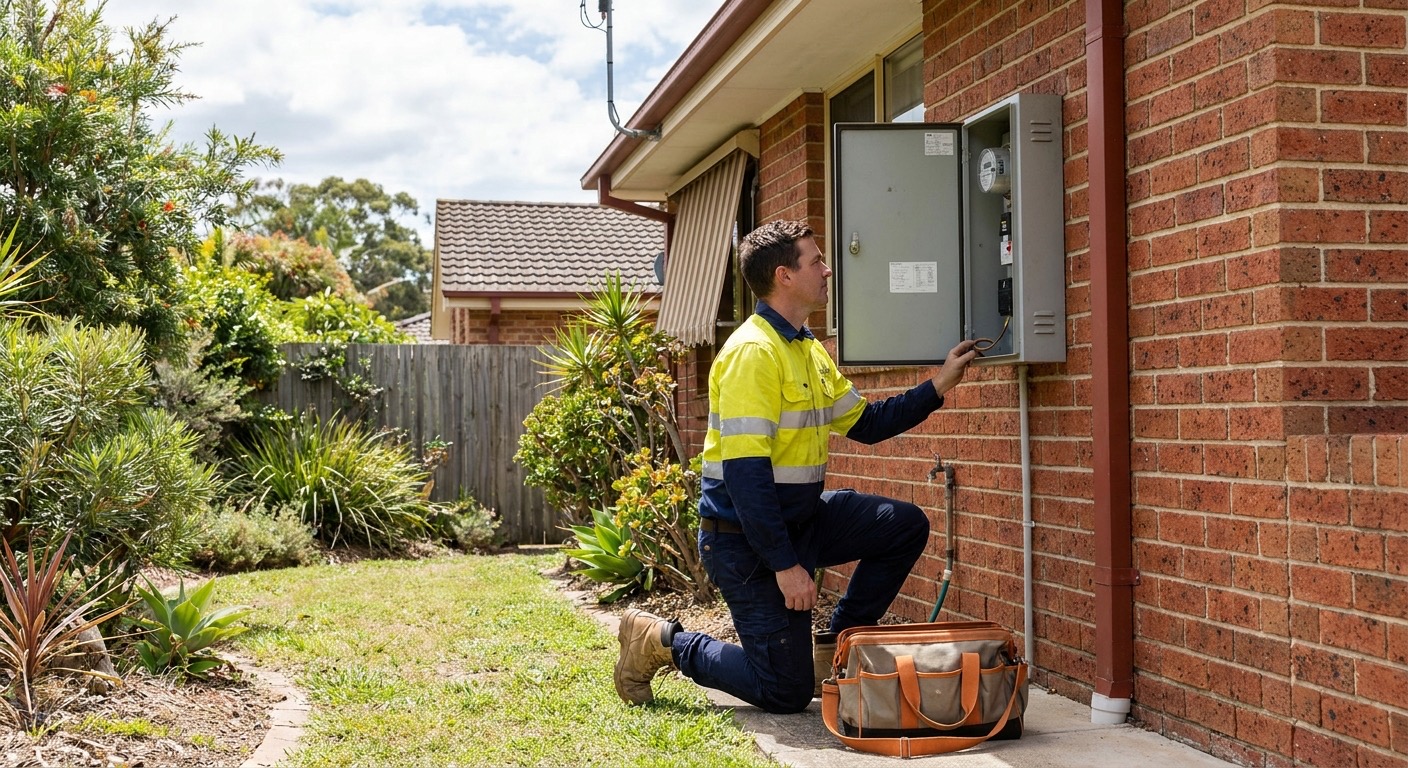
Fusion Projects is based in Tuggerah and runs 24/7 emergency response across the full Central Coast. The team covers suburbs from Gosford and Erina down to Terrigal and Avoca Beach, and north through Wyong, Toukley, and Gwandalan. For genuine emergencies, they respond outside business hours at the same standard as a daytime callout.
With 16 years of experience and 92 five-star Google reviews, Fusion Projects holds both a Level 2 ASP accreditation and a full residential and commercial electrical licence. That means a single call handles everything from a faulty circuit inside the home to a damaged consumer mains or meter box fault, without needing to bring in a second contractor.
When you call about an emergency, the process is straightforward. You describe what you can see, smell, or hear. The technician asks a few quick questions to assess whether anything needs to be isolated immediately, talks you through the safest steps to take while they are on the way, and arrives with the diagnostic equipment needed to identify the fault. Most urgent jobs are resolved in the first visit. If follow-up work is needed, you get a clear explanation of what was found and what the next step is before any further work is booked.
Fusion Projects handles residential and commercial emergency callouts. For a shop or hospitality venue on the Coast that has lost power mid-trade, every minute matters. Commercial sites are treated with the same urgency as residential emergencies.
The Terrigal and coastal strip service area is well within the standard response zone, and the same applies to northern suburbs like Tuggerah and Berkeley Vale, where the team is based. For homeowners who want to know the credentials behind the service, the Level 2 ASP accreditation is verifiable, not just a marketing claim.
In a market where 82% of Central Coast electricians advertise 24/7 response but far fewer hold Level 2 accreditation, Fusion Projects combines both with the highest volume of verified Google reviews among local emergency electricians. That combination, availability, authorisation, and a strong track record, is what you actually want when the situation is urgent.
Emergency Electrical Costs: What to Expect in NSW
Emergency electrical work costs more than a standard daytime booking, and that’s reasonable given the after-hours response. What you pay depends on when you call, what the fault involves, and whether it can be resolved in a single visit.
These are general Central Coast guides. Every job is different and pricing should be confirmed before work starts. A reputable electrician will tell you the cost upfront, not after the fact.
The cost of ignoring an urgent fault almost always exceeds the cost of the callout. A single tripped circuit caught early means isolating one fitting. Left until the switchboard is damaged or a wall cavity has burned, you are looking at a full rewire, insurance paperwork, and weeks without a functional kitchen or bathroom.
One way to reduce after-hours call frequency is to keep your switchboard in good shape before a fault develops. An older home rewire or switchboard upgrade through a licensed team often costs far less than dealing with the cumulative failures that come from outdated wiring. If your home still has ceramic fuses or a switchboard that was installed more than 20 years ago, it is worth asking about it at your next scheduled electrical job.
Payment for emergency callouts is generally taken on the day, after the work is done and you understand what was completed. Most electricians accept card and EFT. For commercial sites with established accounts, invoiced terms can be arranged in advance.
Frequently Asked Questions
What is classed as an electrical emergency?
An electrical emergency is any fault that creates an immediate safety risk: a burning smell from a power point or switchboard, visible sparks or scorch marks, sudden power loss with no obvious cause, a safety switch that trips repeatedly, electric shocks from taps or appliances, or storm damage to wiring and service cables. If you’re unsure, treat it as urgent and call a licensed electrician the same day rather than waiting.
Can I reset my safety switch myself?
You can reset a safety switch once to see if it holds. If it trips again, stop. Repeated tripping means there is a fault drawing too much current or a wiring problem on that circuit. Forcing it back on repeatedly does not fix the underlying issue and can make the fault worse. Call a licensed electrician to diagnose and repair the cause before you restore power to that circuit.
Do I need a Level 2 electrician or a standard one?
For faults inside your home, such as circuits, power points, and the switchboard, a standard licensed electrician is sufficient. If the fault is in the consumer mains, the meter box, or the service cables connecting your property to the street, you need a Level 2 ASP-accredited electrician like Fusion Projects. Calling a Level 2 electrician from the start means you won’t need a second contractor if the fault turns out to be on the network side.
How fast can I get an emergency electrician on the Central Coast?
Response times depend on your location and the time of day, but a local 24/7 service covering suburbs like Gosford, Erina, Tuggerah, and Wyong should reach most addresses within a reasonable time. Fusion Projects operates 24/7 across the Central Coast and prioritises genuine safety emergencies. Outlying areas may take a little longer depending on conditions and demand at the time you call.
Is DIY electrical work legal in NSW?
No. In NSW, all electrical installation work must be carried out by a licensed electrician. Unlicensed electrical work is illegal, voids your home insurance, and creates serious safety risks. Even a simple power point replacement counts as electrical work requiring a licensed electrician. In an emergency, attempting a DIY fix before the electrician arrives can also make the fault more dangerous and harder to diagnose.
What should I tell the electrician when I call?
Tell them your suburb, what you can see or smell, and roughly when it started. Mention if there is smoke, sparking, or a complete loss of power. If it happened after a storm or right after switching on an appliance, say so. That sequence helps the electrician arrive prepared with the right equipment and a clearer picture of where the fault is likely to be.
Conclusion
When something feels wrong with your wiring, the safest move is always to get a licensed electrician there before the situation develops. Turn off the main switch if it is safe to reach, keep clear of anything sparking or scorched, and call a team that is actually authorised to handle whatever they find. Fusion Projects covers the full Central Coast 24/7, holds Level 2 ASP accreditation, and has 92 five-star Google reviews behind them. For urgent help, contact Fusion Projects directly and get someone moving toward you tonight.
Where Fusion does this work. Fusion handles 24/7 emergency callouts and switchboard upgrades across the Central Coast from our Tuggerah workshop, including Wyong, Gosford and Erina. See every suburb we cover, or call 0413 684 874 for a free on-site quote.