Circuit Breaker Keeps Tripping: What to Do
A circuit breaker that keeps tripping is more than an annoyance. It’s your switchboard telling you something is wrong. On the Central Coast, that problem can be caused by anything from an overloaded kitchen circuit to coastal humidity quietly corroding a breaker until it fails under normal load. This guide walks you through exactly what to check, what to do, and when to stop and call a licensed electrician.
Step 1: Understand Why Your Circuit Breaker Keeps Tripping
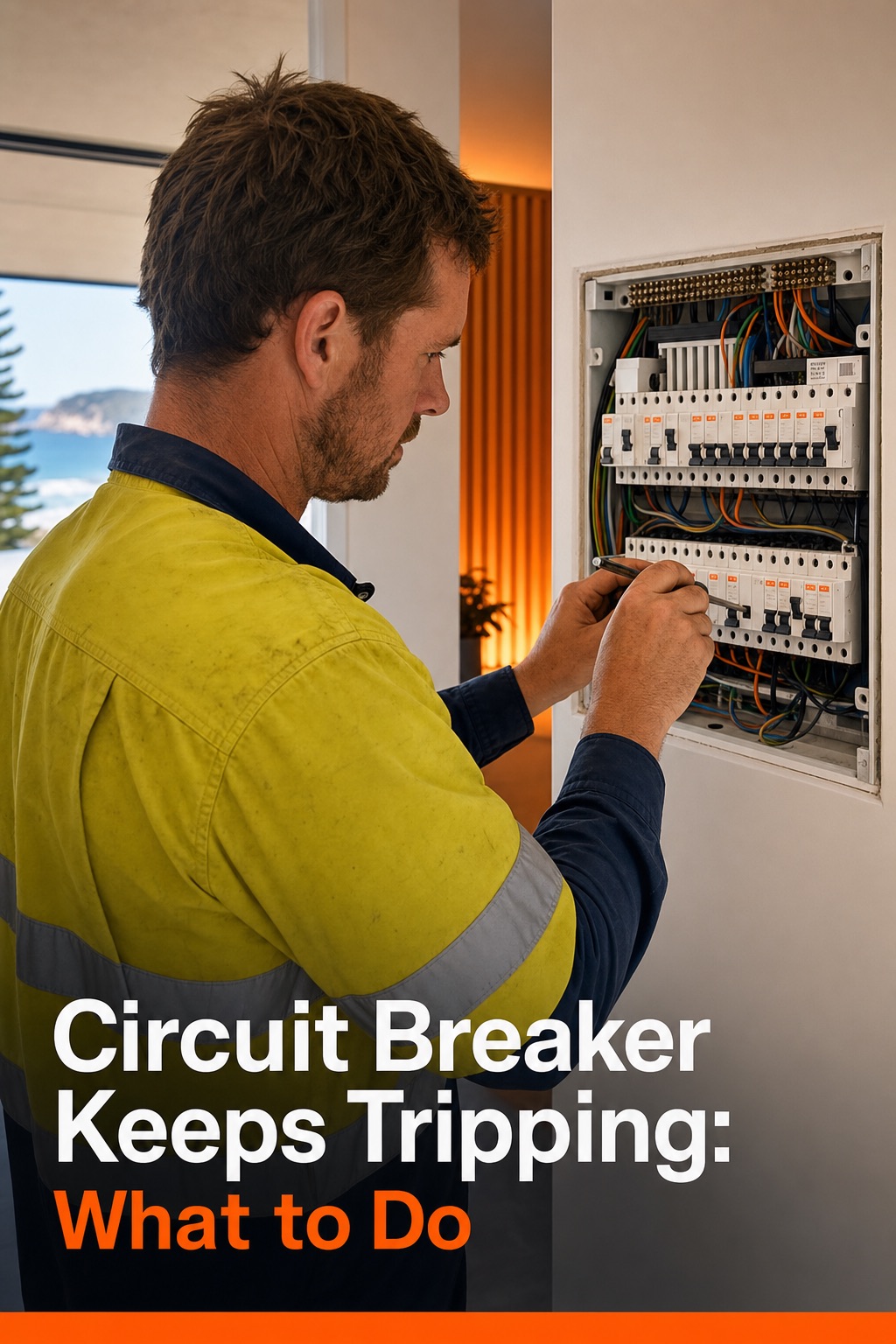
Before you touch anything, you need to know what you’re dealing with. Circuit breakers don’t trip at random. Each trip is the breaker doing its job: cutting power to stop a fault from becoming a fire or a shock hazard.
There are seven main reasons a breaker trips repeatedly in Central Coast homes:
- Overloaded circuit, too many high-draw appliances on one circuit. Running a toaster and microwave together on the same circuit is a common trigger in older kitchens.
- Short circuit, a hot wire and neutral wire touch somewhere in the circuit, causing an instant trip. You often smell burning when this happens.
- Ground fault, a hot wire contacts a grounded metal surface, like a screw touching the side of an outlet box. The breaker trips the moment current finds that path.
- Hot-to-ground short, the hot wire touches the earth conductor. The fix is to separate the wires and secure the hot wire properly around its terminal screw.
- Loose wire connection at the breaker terminal, a wire sitting under the screw head instead of between the two contact plates creates resistance and heat. The breaker trips to protect the circuit. Reseating the wire between the plates and tightening the screw resolves it.
- Faulty or recalled breaker affected by humidity or voltage spikes, this is the one most DIY guides miss. On the Central Coast, salt air and humidity accelerate corrosion inside breaker mechanisms. A breaker that looks fine externally may have a weakened bimetal strip that trips well below its rated current. If the breaker itself is the fault, replacing it with a non-recalled unit is the only fix.
- Ageing switchboard or deteriorated wiring, older homes in suburbs like Gosford, Wyong, and Bateau Bay often have wiring from the 1970s and 80s. Insulation degrades, connections loosen, and the whole system becomes less reliable under modern electrical loads.
The coastal humidity angle is worth pausing on. A brand-new breaker can trip repeatedly if it’s been exposed to sustained moisture. This isn’t a fault with your appliances or your habits. It’s a hardware problem that only shows up when someone tests the breaker itself.
The bimetal strip inside a thermal-magnetic breaker responds to sustained overcurrent by bending and triggering the trip mechanism, a process that becomes unreliable when the strip is corroded or fatigued. That’s why a breaker rated at 20 amps might start tripping at 14 or 15 amps after years of coastal exposure.
By the end of this step, you should know which of these seven causes is most likely in your situation. Keep that in mind as you work through the next steps.
Step 2: Identify Which Breaker Is Tripping and What It Controls
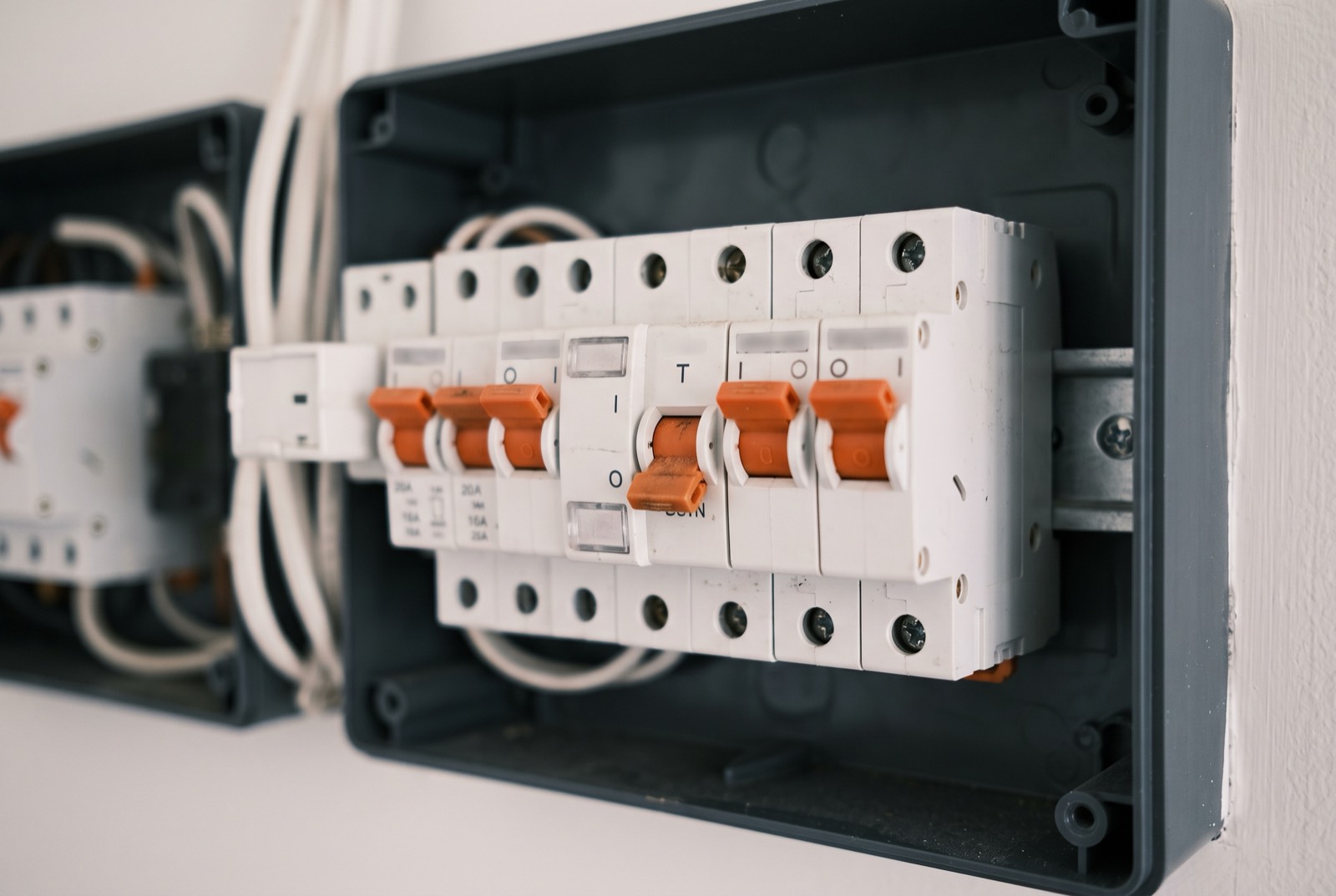
Go to your switchboard. It’s usually in the garage, laundry, or a hallway cupboard. Open the cover and look for the breaker that has moved to the middle position or flipped fully to the off position. That’s your tripped breaker.
Check the label beside it. Most switchboards built after 2000 have circuit labels, though they’re not always accurate. If yours says something like “kitchen” or “bedroom 2”, that’s your starting point. If the labels are blank or faded, note the breaker’s position and rated amperage (usually printed on the toggle , 10A, 16A, or 20A are the most common in residential switchboards).
Now think about what’s on that circuit. A 10A breaker typically handles lighting. A 20A breaker usually feeds power points in a specific zone. A dedicated circuit , labelled “oven”, “air conditioner”, or “hot water” , feeds a single appliance only.
If the tripped breaker feeds a dedicated circuit, the problem is almost certainly the appliance or the wiring to it, not an overload from multiple devices. If it feeds a general power circuit, overloading is more likely.
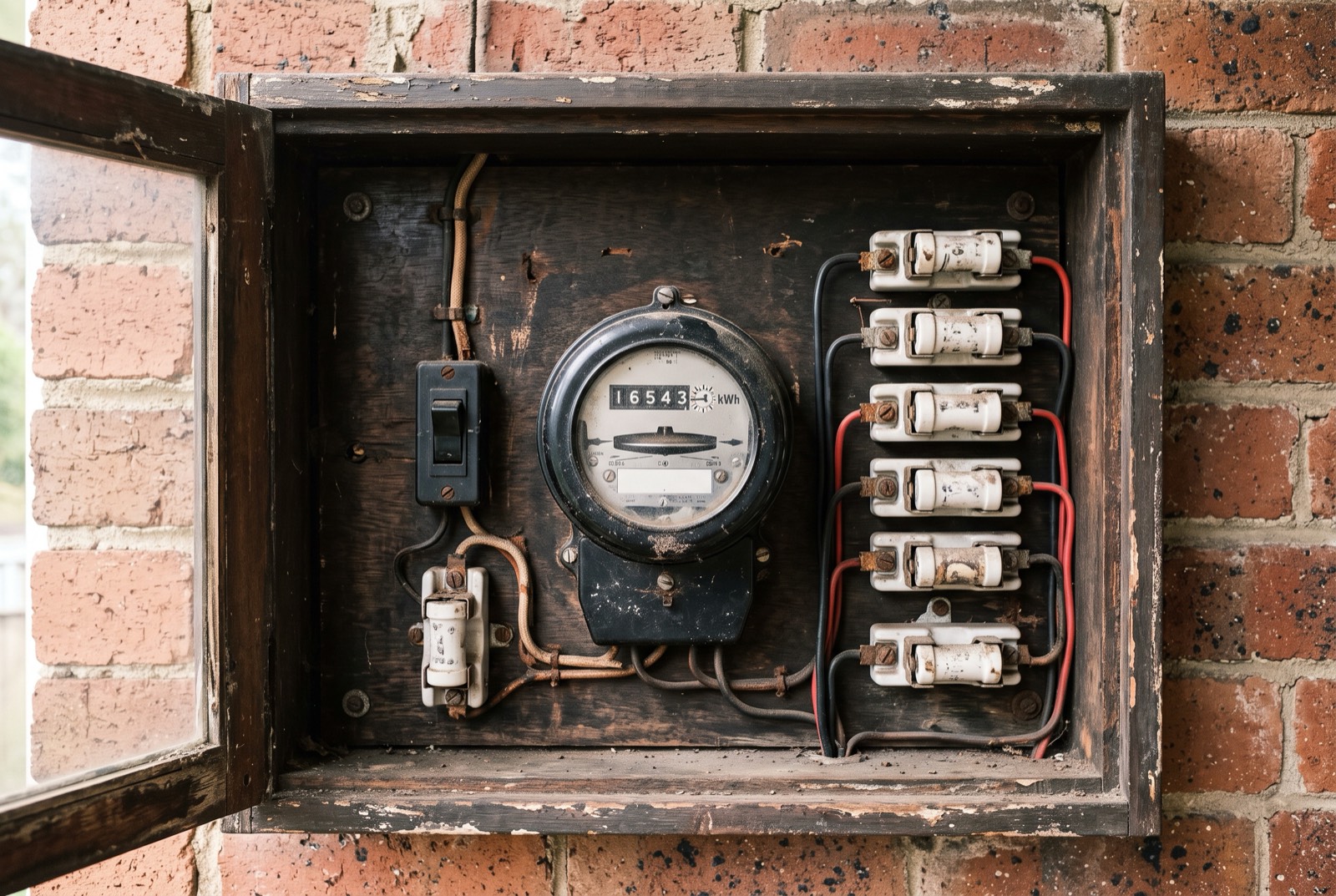
Some Central Coast homes, particularly in suburbs like Kincumber, Long Jetty, and Berkeley Vale, have older switchboards with ceramic fuses rather than circuit breakers. A ceramic fuse doesn’t “trip” , it blows. If you see a fuse that looks scorched or has a broken wire element inside, that’s the same signal. Do not replace a ceramic fuse with a higher-rated one. That defeats the protection entirely and is a fire risk.
If you’re uncertain which circuit is affected, a pre-purchase or safety electrical inspection will map every circuit in your home and identify which breakers may be undersized or mislabelled , useful if you’re buying an older property or planning a renovation.
By now you should know which breaker is tripping and have a rough idea of what’s connected to it.
Step 3: Check for Overloaded Circuits Before Resetting
Don’t reset the breaker yet. First, figure out whether an overload caused the trip. If you reset without removing the cause, it’ll trip again immediately or after a few minutes.
Go to the area the circuit feeds and unplug everything from the power points. Every appliance, charger, and device. Then check what was running when the breaker tripped. Common overload culprits in Australian homes include:
- Toaster and microwave running at the same time on the same circuit (each can draw 8 to 10 amps, and together they exceed a 10A breaker’s rating instantly)
- A portable air conditioner or electric heater plugged into a general power point circuit alongside other appliances
- Extension boards with four or six sockets all fully loaded
- A new appliance added to a circuit that was already near capacity
If the circuit is genuinely overloaded by the way your home uses power, the right fix isn’t just to reset and hope. It’s to add a dedicated circuit for the high-draw appliance. A licensed electrician can run a new circuit from the switchboard to the kitchen or the room where the overload keeps happening. That’s a permanent solution, not a workaround.
Also check for anything that might cause a ground fault or short circuit: a damaged extension cord with exposed wires, an appliance with a cracked plug, or an outdoor power point that’s been exposed to rain. Any of these can cause a trip that has nothing to do with the total load on the circuit.
If you find a damaged cord or appliance, set it aside and don’t plug it back in. That item needs to be repaired or replaced before it goes back on any circuit.
Australian wiring standards set requirements for circuit protection, conductor sizing, and overload protection. If your current circuits don’t meet those requirements, a switchboard upgrade may be the only compliant path forward. Fusion Projects handles switchboard upgrades across the Central Coast, from Gosford and Erina through to Wyong, Tuggerah, and Berkeley Vale, ensuring your home’s protection meets current standards.
Once you’ve removed every possible load from the affected circuit and addressed any visible damage, you’re ready to reset.
Step 4: Safely Reset the Circuit Breaker
Resetting a tripped breaker is straightforward, but there’s a right way to do it. Skipping the sequence can make an underlying fault harder to diagnose.
Here’s the correct sequence:
- Make sure all appliances on the affected circuit are still unplugged or switched off at the wall.
- Go to your switchboard and find the tripped breaker. It will be in the middle or off position.
- Push the breaker firmly to the fully off position first. Some breakers need to be fully off before they’ll reset.
- Now switch it firmly to the on position. You should feel a click and the toggle should sit flush with the other breakers.
- Check whether the power has restored to the circuit.
If the breaker holds, plug your appliances back in one at a time. Wait a minute or two between each one. If it trips again after you plug in a specific appliance, that appliance is the fault. Set it aside for testing or repair.
If the breaker trips again immediately when you reset it, with nothing plugged in at all, stop. That’s a sign of a wiring fault , a short or ground fault in the circuit itself, not in any appliance. Resetting repeatedly won’t fix it and can cause heat build-up in the wiring.
If the breaker won’t stay in the on position or feels loose and wobbly, the breaker mechanism itself may be faulty. As covered in Step 1, coastal humidity on the Central Coast can degrade the internal mechanism so the breaker trips at loads well below its rating. A faulty breaker needs to be replaced , that’s a job for a licensed electrician like Fusion Projects, not a DIY fix.
One reset attempt is reasonable. Two is a signal to pause and think. Three trips without a clear cause means you need a professional fault-finding inspection, not another reset.
Step 5: Recognise Warning Signs That Need a Licensed Electrician
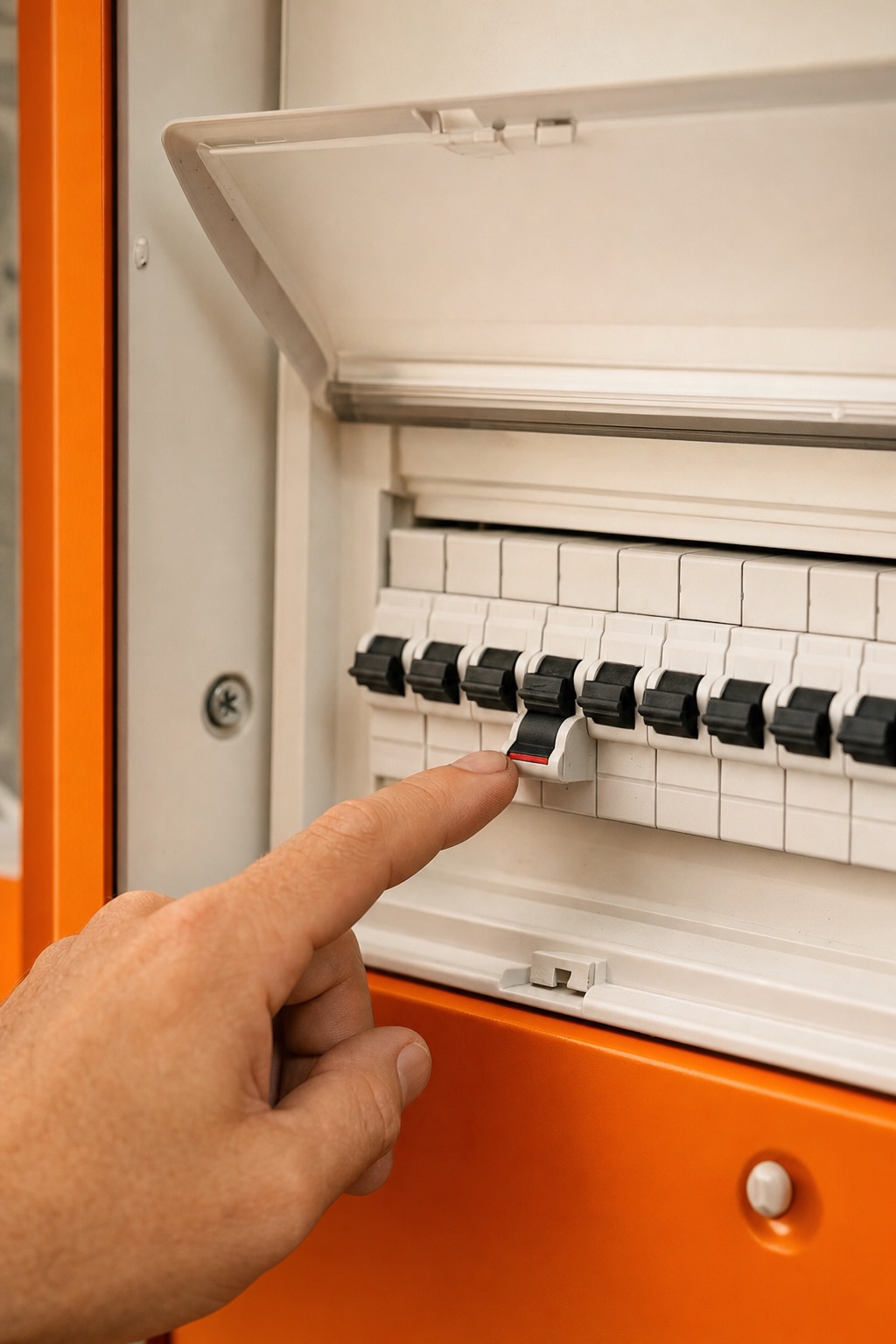
Some tripping breakers are a nuisance. Others are a safety risk. Knowing the difference is the most important thing in this guide.
Call a licensed electrician the same day if you notice any of these:
- Burning smell from a power point, appliance, or the switchboard itself, this means something is already hot enough to char insulation or contacts. Don’t wait.
- Scorch marks or discolouration around an outlet or on the switchboard cover, visible heat damage means the fault has already progressed.
- The breaker trips repeatedly with nothing plugged in, as above, this points to a wiring fault in the circuit itself.
- A buzzing or crackling sound from the switchboard or a wall, arcing sounds like this are a fire risk.
- A shock or tingle when touching a tap, appliance, or metal surface, this is a ground fault in the wiring reaching surfaces that shouldn’t carry current.
- The breaker trips during storms or after power restored after an outage, voltage spikes from the grid can damage breakers, particularly older units already weakened by corrosion.
- Multiple breakers tripping at the same time, this often points to a fault at the main switch or in the consumer mains, which requires a Level 2 ASP-accredited electrician to assess.
If there’s smoke or flames anywhere near the switchboard, don’t touch it. Get everyone out of the property and call 000. Then call your electrician once you’re outside.
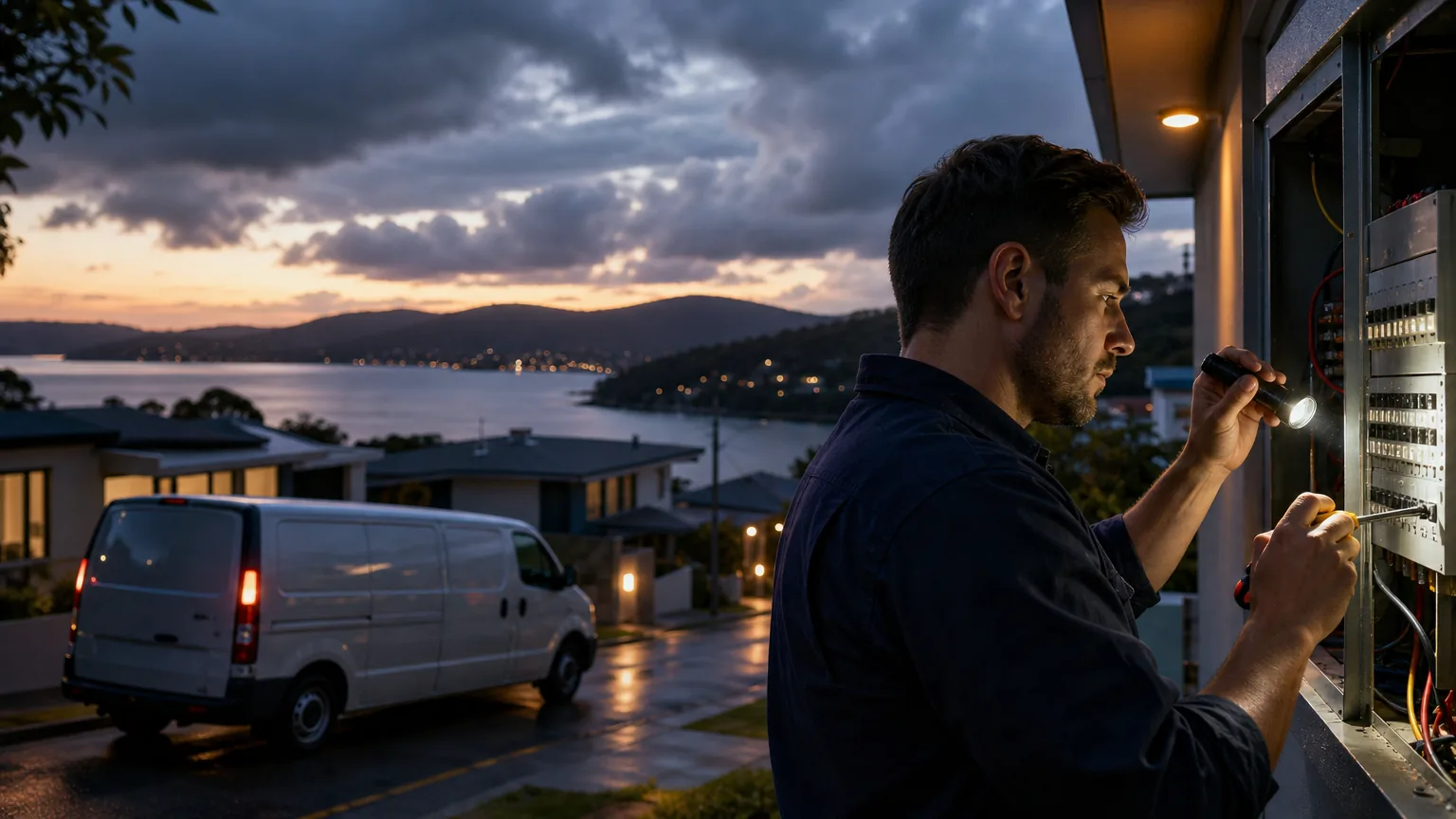
Fusion Projects handles electrical emergencies across the Central Coast including repeated tripping, burning smells, and storm-related faults. With 16 years of experience and 24/7 response, the team can reach most Central Coast suburbs including Terrigal, Avoca Beach, Gosford, and The Entrance the same day.
The rule is simple: if you can smell it, see it, or hear it, treat it as urgent. One phone call to a licensed electrician is always cheaper than a house fire.
Step 6: Know When You Need a Switchboard Upgrade
Sometimes a tripping breaker isn’t the problem. It’s the symptom. If your home was built before 1990 and you’re still running the original switchboard, the whole panel may be undersized for modern electrical loads.
Older switchboards were designed around the appliances of their era. A 1970s home in Gwandalan or Niagara Park was wired for a few lights, a stove, and a fridge. It wasn’t designed for reverse-cycle air conditioning, multiple flat screens, EV charging, and a home office running simultaneously.
Signs that a switchboard upgrade is the right next step:
- Your board has ceramic fuses instead of circuit breakers
- There are no RCD safety switches on the board (required under AS/NZS 3000:2018 for all new and upgraded installations)
- The board feels warm to the touch or shows any scorching near the main switch
- Breakers trip regularly under normal household loads, not just during peak use
- You’re adding a significant new load , an EV charger, a ducted air conditioner, or a solar and battery system , and the existing board doesn’t have room
- A licensed electrician has flagged the board on a previous inspection
A modern switchboard upgrade replaces the old panel with a new unit that includes properly rated circuit breakers for every circuit. RCD protection is added for all power and lighting circuits as required. The circuits are labelled clearly and the board is sized to handle your current load with room for future additions.
If you’re planning a switchboard upgrade on the Central Coast, it’s worth understanding what the job involves. Fusion Projects outlines the full process and common signs you need one on their switchboard upgrades page, including what happens when an older board causes repeated tripping under normal loads.
For homeowners across suburbs like Erina, Tuggerah, and Catherine Hill Bay who are also considering EV charging or solar battery storage, upgrading the switchboard at the same time as those installations is usually the most cost-effective approach. It avoids a second call-out and ensures the board is correctly rated for the combined load from day one.
Switchboard costs vary depending on the size of the home, the number of circuits, and whether RCD upgrades are included. For a rough comparison of what switchboard upgrades typically involve in terms of scope and pricing, a general industry cost guide gives a useful breakdown of cost factors that apply broadly across Australian states, including labour, materials, and the number of circuits being upgraded.
A licensed Central Coast electrician can assess your switchboard, tell you whether individual breakers need replacing or the whole board needs upgrading, and carry out the work to AS/NZS 3000:2018 standard. Fusion Projects is Level 2 ASP accredited, which means the team can also handle the consumer mains connection work that a general electrician can’t legally touch.
Frequently Asked Questions
Why does my circuit breaker keep tripping with nothing plugged in?
If the breaker trips with nothing connected to that circuit, the fault is in the wiring itself, not any appliance. Common causes include a short circuit where wires have touched, a ground fault where a hot wire contacts a grounded surface, or a faulty breaker whose internal mechanism has failed. On the Central Coast, humidity can degrade a breaker over time until it trips below its rated load. A licensed electrician needs to test and diagnose the circuit before you restore power to it.
Is it safe to keep resetting a tripping circuit breaker?
One reset is fine if you’ve removed the likely cause first. Repeated resets without finding and fixing the fault are not safe. Every time a faulty circuit carries current, it generates heat. Forcing a breaker back on while a wiring fault is present risks overheating insulation, damaging the breaker itself, or starting a fire inside a wall cavity. If the breaker trips more than twice without a clear cause, stop resetting and call a licensed electrician.
What causes a circuit breaker to trip in humid coastal areas?
Salt air and sustained humidity corrode the bimetal strip inside a thermal-magnetic breaker over time. Once corroded, the strip bends at lower temperatures and trips at current levels well below the breaker’s rated amperage. This means the breaker is effectively faulty even though it looks normal from the outside. Replacing the corroded unit with a correctly rated, non-recalled breaker is the only fix. A licensed electrician can test the breaker and confirm whether it’s the cause.
When do I need a switchboard upgrade instead of just a new breaker?
If your board has ceramic fuses, no RCD safety switches, or breakers that trip under normal household loads, a full upgrade is usually more appropriate than swapping one breaker. Older boards weren’t designed for modern loads like EV chargers, air conditioning, or solar battery systems. If multiple breakers trip regularly or the board feels warm to the touch, a licensed electrician should inspect the whole panel, not just the individual breaker that tripped last.
Can I replace a circuit breaker myself in Australia?
No. In Australia, replacing a circuit breaker is electrical work that must be done by a licensed electrician. Working inside a switchboard without a licence is illegal under state electrical safety legislation and voids your home insurance if something goes wrong. It also carries real personal risk, switchboards can carry lethal current even when the main switch is off. Always use a licensed electrician for any switchboard work, including breaker replacement.
How much does it cost to fix a tripping circuit breaker on the Central Coast?
The cost depends on the cause. Replacing a single faulty breaker is a relatively minor job. Finding and repairing a wiring fault involves fault-tracing, which takes more time. A full switchboard upgrade is a larger project. An electrician will need to inspect the circuit first to give an accurate quote. Fusion Projects provides assessments and quotes for Central Coast homes across suburbs including Gosford, Tuggerah, Terrigal, and The Entrance.
What to Do Next
Work through the steps above in order: identify the cause, remove the load, reset once, and watch what happens. If the breaker trips again with nothing connected, or you notice any burning smell, scorch marks, or sounds from the switchboard, stop and get a licensed electrician there the same day. Fusion Projects has been handling exactly this kind of fault on the Central Coast for over 16 years, with 24/7 emergency response and 92 five-star Google reviews behind the work. Get in touch for a same-day assessment.
Where Fusion does this work. Fusion handles switchboard upgrades across the Central Coast from our Tuggerah workshop, including Wyong. See every suburb we cover, or call 0413 684 874 for a free on-site quote.